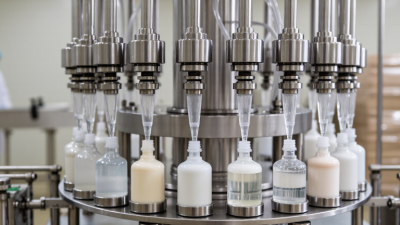
How to Choose a Cosmetic Filling Machine?
Choosing a cosmetic filling machine is not simply a matter of selecting the fastest model. The correct choice depends on formula viscosity, container shape, fill volume, production scale, and cleaning requirements. A thin facial toner behaves differently from a thick cream or silicone-based serum. Small differences matter.
Jörg Schuler, a packaging and filling technology specialist, states, “Reliable filling is built on repeatability, product care, and controlled hygiene.” This principle should guide every purchasing decision. A machine may advertise impressive speed, yet poor dosing accuracy can create leaks, rejected units, and expensive product waste. Speed can mislead.
In practical production, I would examine the filling system beside the product itself. Piston fillers often suit creams and gels, while peristaltic systems can protect sensitive formulas from excessive contact. Servo-driven dosing may improve accuracy, but it can also increase investment and maintenance demands. The best cosmetic filling machine should support stable output, gentle handling, simple changeovers, and documented cleaning procedures.
Ask for a sample test using your actual formula and packaging. Watch the nozzle during start-stop cycles. Check whether the fill level remains consistent after several hundred containers. Also inspect the machine’s contact materials, controls, guarding, and maintenance access. Some specifications look excellent on paper but feel inconvenient on the factory floor. That weakness is easy to overlook.
A reliable supplier should provide training, validation support, spare parts, and responsive technical service. Consider future products, not only today’s order. Choosing too narrowly may save money now and restrict growth later.
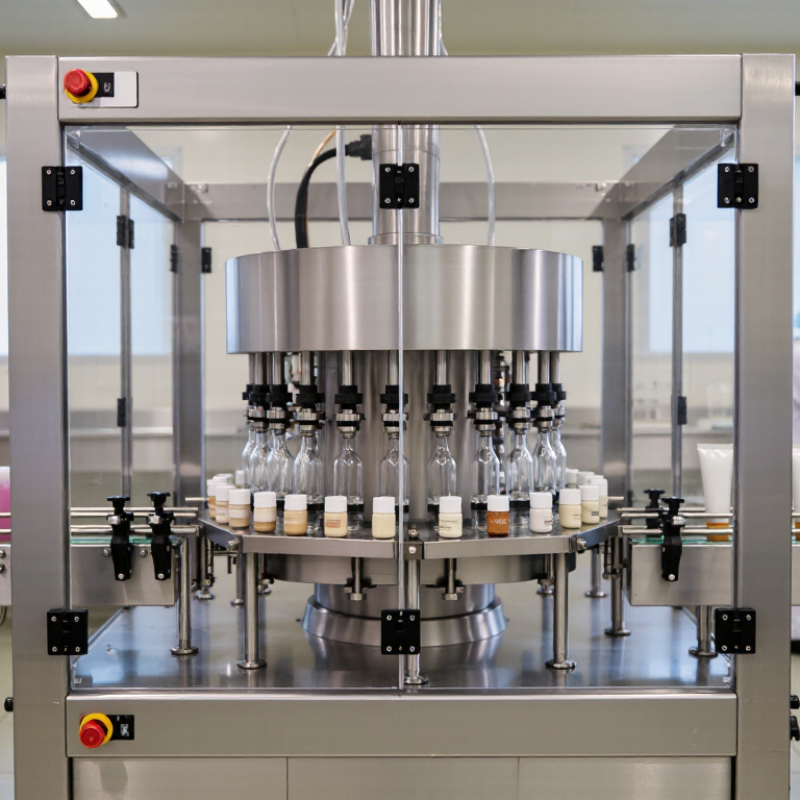
Define the Product and Filling Requirements
Before choosing a cosmetic filling machine, define the product in measurable terms. A light facial serum behaves differently from a thick cream or balm. Record viscosity, temperature sensitivity, particle size, foaming tendency, and flow behavior. Small details matter.
Measure the target fill volume and acceptable weight variation. A 30-milliliter bottle may require a different dosing system than a 5-gram jar. Check the container opening, shape, material, and stability on the conveyor. Narrow necks can create dripping, while soft tubes may deform under pressure. The product’s temperature during filling also affects accuracy. Warm cream may flow smoothly, then become too thick after cooling.
Production requirements need equal attention. Define the expected output per hour, batch size, cleaning method, and changeover frequency. Choose contact materials that suit the formulation and support hygienic production. Confirm that operators can inspect, adjust, and clean the machine without unnecessary tools. Written test records should include fill accuracy, restart performance, and several container types.
Do not trust a short demonstration alone. Request samples filled with your actual product. Watch for bubbles, stringing, splashing, and residue around the nozzle. These problems may appear only after continuous operation. A machine can look perfect for ten minutes. That is not enough evidence. In practice, teams sometimes prioritize speed and later discover difficult cleaning or unstable dosing. Recheck the requirements before making a purchase.
Match Machine Types to Cosmetic Formulas
How to Choose a Cosmetic Filling Machine?
Match Machine Types to Cosmetic Formulas
A cosmetic filling machine should follow the formula, not only the container size. Thin toners and watery serums usually suit peristaltic or overflow systems. These machines can provide clean dosing with limited product contact. Creams, balms, and dense lotions need piston or servo-driven piston fillers. Their controlled pressure handles high viscosity more reliably. Test the formula at its actual filling temperature. Viscosity can change sharply after cooling.
Airless creams and emulsions require gentle product movement. Excessive shear may damage texture or create unwanted bubbles. A lobe pump or low-shear piston system can be more suitable. Gels with suspended particles need wide product paths and carefully selected nozzles. Narrow passages may cause blockages. Foaming cleansers need slower filling speeds and diving nozzles. This reduces turbulence near the surface.
Small batches often benefit from flexible, easy-to-clean equipment. Large production lines may require servo control, multiple heads, and automatic nozzle shutoff. However, more automation does not always mean better filling. I have seen machines perform well during trials but struggle after formula changes. That weakness matters. Check dosing accuracy, cleaning time, drip control, and changeover steps with real samples. Ask operators to run thick, thin, cold, and room-temperature batches. A short test can reveal more than a polished specification sheet.
Evaluate Filling Accuracy, Speed, and Production Capacity
How to Choose a Cosmetic Filling Machine?
Filling accuracy should come before impressive speed. During a factory trial, run at least 100 containers with the intended cream, lotion, or serum. Record average weight, variation, and rejected units. A machine delivering 10,000 bottles per hour means little if frequent underfills create costly rework. FDA’s Process Validation Guidance identifies three validation stages, including continued process verification. That principle fits filling equipment well. Measure performance after setup, not only during a perfect demonstration.
Speed depends on product viscosity, nozzle design, container shape, and operator handling. Ask for results using your actual formula and packaging. A thin serum may fill smoothly, while a thick cream leaves strings around the nozzle. Watch the first and last containers in each batch. Small delays matter. Track changeover, cleaning, and adjustment time, then calculate effective output rather than relying on the rated cycle speed.
Production capacity also needs a practical calculation. Compare planned demand with usable hours, maintenance time, and seasonal peaks. ISO 22716:2007 emphasizes suitable, cleanable, and properly controlled production equipment. That requirement should shape your evaluation. I would also request a 30-minute endurance test, although this is not a full production study. It can expose warming pumps, unstable weights, or awkward controls. My own caution is simple: the fastest machine may become the slowest one after frequent stoppages. Reliability deserves a place beside every speed figure.
Check Material Compatibility, Hygiene, and Cleaning Features
How to Choose a Cosmetic Filling Machine?
Material compatibility should be tested before evaluating filling speed. Product oils, emulsions, pigments, and preservatives can react differently with stainless steel, seals, and hoses. Choose contact parts made from suitable, traceable materials. For many formulations, 316L stainless steel is practical, but it is not automatically suitable for every ingredient. Check elastomer resistance, swelling, and extractables with the supplier. Small samples can reveal unexpected problems.
Hygiene depends on design, not appearance. The WHO Global Report on Infection Prevention and Control states that up to 70% of healthcare-associated infections may be prevented through effective measures. Cosmetics are not medical products, yet the principle remains valuable. Select machines with sloped surfaces, minimal dead legs, hygienic welds, and protected product paths. ISO 22716 recommends controlled cleaning, maintenance, and production practices for cosmetics. Ask whether the equipment supports clean-in-place procedures, quick disassembly, and documented cleaning validation. Shorter cleaning time helps, but rushed cleaning can leave residue inside valves. I have seen polished equipment still fail practical inspections. That is worth remembering. Request cleaning records, material certificates, and residue test results before purchase. A machine that fills quickly but cleans poorly may increase downtime, contamination risk, and batch rejection.
How to Choose a Cosmetic Filling Machine? - Check Material Compatibility, Hygiene, and Cleaning Features
| Filling Machine Type | Suitable Cosmetic Materials | Typical Viscosity Suitability | Common Filling Range | Material Compatibility Considerations | Hygiene and Cleaning Features to Check | Main Advantages | Important Limitations |
|---|---|---|---|---|---|---|---|
| Peristaltic Filler | Serums, lotions, liquid foundations, essential-oil blends, alcohol-based liquids, and other low- to medium-viscosity products | Low to medium; performance depends on tubing size and product flow behavior | Approximately 0.1–5,000 mL per fill, depending on the pump and tubing configuration | Only the tubing contacts the product. Confirm chemical resistance to oils, solvents, alcohol, fragrances, and preservatives. | Tool-free tubing replacement, disposable product paths, smooth sanitary surfaces, and easy drainage are desirable. | Low cross-contamination risk, quick product changeover, and simple product-contact maintenance | Tubing can wear or deform; unsuitable tubing may swell, crack, absorb ingredients, or affect dosing accuracy. |
| Piston Filler | Creams, gels, moisturizers, shampoos, conditioners, masks, scrubs, and high-viscosity emulsions | Medium to very high; suitable for products that require positive displacement | Approximately 5–10,000 mL per fill, depending on cylinder size and machine design | Check compatibility of the piston, seals, valves, and hoses with oils, surfactants, acids, alcohols, and abrasive particles. | Sanitary pistons, removable valves, low-retention piping, drainable product paths, and CIP capability where applicable | Good accuracy and strong handling capability for thick or particulate-free creams | More components contact the product; disassembly may be required for thorough cleaning and allergen control. |
| Servo Pump Filler | Lotions, creams, gels, liquid soaps, shampoos, makeup products, and products with changing viscosity | Low to high, depending on pump type, nozzle design, and product temperature | Approximately 1–10,000 mL per fill, with programmable stroke or flow control | Select wetted parts according to product pH, solvent content, fragrance oils, temperature, and particulate load. | Quick-release manifolds, sanitary pump heads, minimized dead legs, recipe-controlled flushing, and optional CIP systems | Flexible dosing, repeatable control, and suitability for automated production lines | Higher initial complexity; pump seals and valves require inspection and periodic replacement. |
| Gravity Filler | Water-like toners, micellar water, liquid cleansers, alcohol-based sprays, and other free-flowing liquids | Low viscosity and free-flowing products | Approximately 10–5,000 mL per fill, depending on nozzle and tank arrangement | Confirm that tank, valve, gasket, and nozzle materials resist alcohol, acids, fragrances, and preservatives. | Simple openable tank, smooth internal surfaces, drainable lines, and easy nozzle removal for washing and sanitizing | Simple construction, low maintenance, and relatively easy cleaning | Not appropriate for thick, aerated, or highly shear-sensitive products; filling speed can depend on liquid head pressure. |
| Overflow Filler | Thin shampoos, liquid soaps, cleansing waters, and transparent or foaming liquids | Low to medium viscosity, especially when a consistent visible fill level is important | Approximately 30–5,000 mL per fill, depending on nozzle assembly and container format | Product should return smoothly through the overflow path; check compatibility of return lines and seals. | Separate return manifold, cleanable overflow channels, drainable reservoir, and accessible nozzles are important. | Creates a uniform visual fill level even when container internal volume varies slightly | May generate foam with surfactant-rich products; recirculation can increase exposure to air or contamination. |
| Auger Filler | Loose powders such as face powder, dry masks, bath powders, pigment blends, and powdered cosmetic ingredients | Dry, free-flowing or moderately cohesive powders | Approximately 1–5,000 g per fill, depending on auger diameter and product bulk density | Consider powder abrasiveness, moisture sensitivity, electrostatic behavior, and bulk-density variation. | Dust-control extraction, removable auger components, sealed bearings, smooth hopper surfaces, and tool-free disassembly | Controlled dosing for powders and the ability to adjust fill weight through auger speed and cycle settings | Accuracy can change with humidity, aeration, particle size, and bulk-density differences between batches. |
| Vacuum Filler | Low-viscosity liquids for small containers, bottles, vials, and products requiring controlled aspiration | Low viscosity; performance decreases as viscosity and entrained air increase | Typically approximately 1–1,000 mL per fill, depending on the vacuum system and container geometry | Check resistance of vacuum hoses, seals, and reservoirs to alcohols, solvents, fragrance components, and oils. | Sanitary vacuum traps, cleanable reservoirs, condensate drainage, replaceable seals, and accessible product-contact tubing | Useful for small fills and certain container shapes with relatively simple product contact | Sensitive to leaks, foaming, and container geometry; not generally preferred for thick creams. |
Compare Automation, Maintenance, Cost, and Supplier Support
How to Choose a Cosmetic Filling Machine?
Automation should match your product range, not impress your visitors. For thick creams, piston filling can improve volume consistency. Servo controls also support repeatable dosing during frequent format changes. The 2019 Smart Factory Study found that 86% of manufacturers viewed smart manufacturing as a major competitiveness driver within five years. That figure supports automation, but it does not justify buying the most complex machine.
Maintenance deserves equal attention. Ask how quickly operators can remove pumps, seals, and filling nozzles without special tools. A machine that takes hours to clean may reduce daily output. The U.S. Department of Energy’s Operations & Maintenance Best Practices Guide reports that preventive maintenance can cost 12% to 18% less than reactive maintenance. In practice, many buyers still compare purchase prices first. I have seen that shortcut fail.
Supplier support should be measurable. Request response-time commitments, spare-parts availability, training hours, and documented FAT and SAT procedures. Remote diagnostics can shorten troubleshooting, but only when technicians understand your formulas and cleaning routines. PMMI’s packaging industry reports continue to identify labor availability and equipment flexibility as important investment concerns. A cheaper machine may become expensive after one missed production day. I would also test viscosity changes before approval. Laboratory samples can behave perfectly, while warm, air-entrained product behaves differently on the factory floor.
Related Posts
-
How to Choose the Best Cosmetic Filling Machine in 2026?
-
Discover Superior Quality of Best Cosmetic Filling Machines from Leading Chinese Manufacturers
-
Mastering the Selection Process for the Best Cosmetic Filling Machine in Global Markets
-
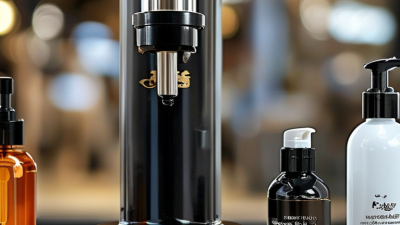
Top 10 Cosmetic Filling Machines for Global Buyers
-
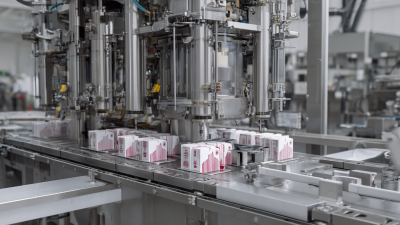
Maximizing Efficiency: Top Strategies for Selecting the Best Liquid Packaging Machine
-
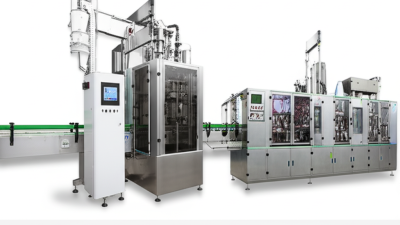
Chinese Excellence in Liquid Packaging Machines for Global Buyers