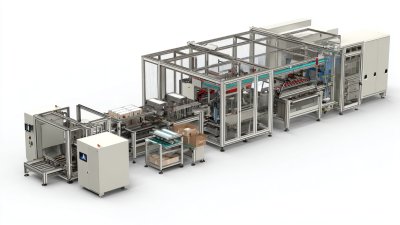
China Top Case Packing Machine Manufacturers and Suppliers
Choosing a case packing machine is not simply a matter of comparing prices. It affects product protection, labor efficiency, line stability, and future expansion. In China, manufacturers offer automatic, semi-automatic, robotic, and customized packing systems for cartons, bottles, cans, trays, and pouches. The right supplier should understand the product, packaging material, factory layout, and production rhythm.
Jorge Izquierdo, Vice President of Market Development at PMMI, has said, “Automation improves productivity, quality, and workplace safety.” That principle remains practical on a busy packaging line. A reliable case packing machine should form cases accurately, place products gently, seal consistently, and communicate smoothly with upstream equipment. Operators also need clear controls, accessible changeover parts, and realistic maintenance support. Small details matter.
This guide examines leading China case packing machine manufacturers and suppliers through a practical purchasing lens. It considers engineering experience, machine construction, testing procedures, customization ability, certifications, spare parts, and after-sales service. Factory visits, sample trials, and reference checks can reveal more than attractive brochures. A polished catalog proves little.
No supplier is perfect. Even a well-designed machine may require adjustments for unusual products or unstable cartons. Buyers should question promised speeds and request performance data from comparable applications. They should also confirm installation support, software ownership, warranty terms, and response times. These checks may feel slow, but they prevent expensive surprises later.
China’s packaging industry is diverse, and quality varies between suppliers. Careful evaluation is essential. This overview aims to help food, beverage, pharmaceutical, and consumer goods manufacturers identify dependable partners for efficient, safe, and maintainable case packing solutions.
What Is a Case Packing Machine?
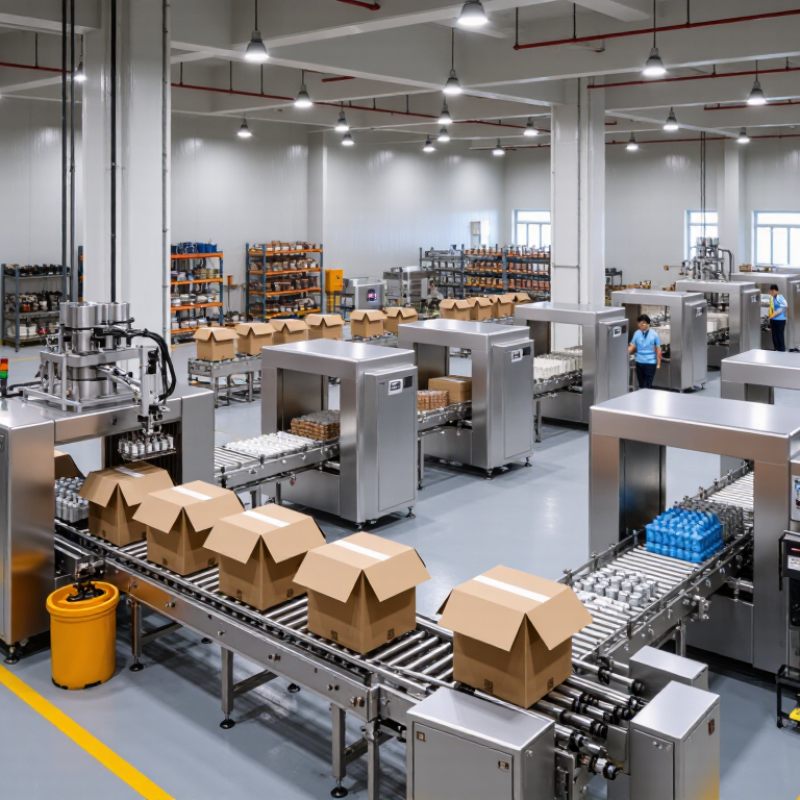
A case packing machine is industrial equipment that places products into shipping cases, usually cartons or corrugated boxes. It can group bottles, pouches, trays, or smaller cartons before loading them into a case. The process may include case forming, product collation, insertion, flap closing, and sealing. Sensors monitor product position and case presence. A control system coordinates each movement. This sounds simple. It is not always.
In practical production, packing performance depends on product shape, case size, speed, and packing pattern. A machine handling rigid cartons may need different guides than one handling flexible pouches. Operators should inspect changeover points, guarding, sensors, and cleaning access before purchase. Reliable equipment should provide stable feeding and clear fault messages. Technical documents should explain capacity, air requirements, power use, and maintenance intervals. One overlooked detail can create repeated stoppages.
Tips: Test real products and cases before approval. Watch the loading area closely. Check whether operators can adjust guides without special tools. Leave enough space for inspection and safe maintenance. Ask for sample cases from actual production conditions. A short trial may reveal weak seals, crushed corners, or uneven loading. Do not judge performance from speed alone.
How Case Packing Machines Work
Case packing machines turn a loose product flow into organized shipping cases. The process starts with an infeed conveyor. Sensors count bottles, cartons, or pouches as they arrive. A control system checks timing and spacing. If the pattern is wrong, the line pauses or diverts the group. Small details matter here. Uneven spacing can create empty cases or damaged products.
At the same time, a case erector opens flat corrugated blanks and forms square containers. Adhesive or tape holds the bottom closed. A packing head then loads products into each case. Some systems use side loading, while others pick products from above. Servo drives control movement with measured speed and force. Guides support the case walls during loading. This reduces scuffing, tilting, and product impact. Sensors confirm that the case is present before loading begins.
After loading, flaps fold and the top is sealed. A final sensor can verify closure, position, and case presence. From practical line checks, changeover accuracy often affects performance more than maximum speed. Operators should record jams, seal temperature, and rejected cases. No machine is perfect. Dust, weak cartons, and poor product alignment still cause interruptions. A rushed adjustment may solve one jam and create another. Careful testing with real materials exposes these issues before full production. Routine cleaning, guarding checks, and documented settings support safer, steadier operation.
Key Types of Case Packing Machines in China
China Top Case Packing Machine Manufacturers and Suppliers
Key Types of Case Packing Machines in China
Chinese case packing equipment now covers several practical formats. Wraparound case packers fold corrugated blanks around products, reducing carton material and improving pallet stability. Top-load machines place bottles, cartons, or pouches into open cases from above. Side-load systems suit products requiring horizontal grouping. Robotic case packers add flexibility for mixed sizes and frequent changeovers. They also need stronger programming skills.
According to Grand View Research, the global packaging machinery market reached approximately USD 55.45 billion in 2023. Its forecast indicates continued growth through 2030. Mordor Intelligence also projects the packaging machinery market to expand at over 5% annually during its forecast period. These figures support demand for adaptable case packing equipment, especially in food, beverage, personal care, and household product factories.
Machine selection should follow the product, case style, and required speed. A wraparound model may suit stable cartons moving in uniform lanes. A robotic top-load system may perform better when pack patterns change weekly. In production trials, engineers should check carton compression, product spacing, glue performance, and operator access. Small details matter. A machine rated for 20 cases per minute may slow sharply with weak cartons or irregular products. That trade-off matters. Buyers should request test data, changeover times, maintenance records, and verified output from Chinese suppliers before approving a final design.
China Top Case Packing Machine Manufacturers and Suppliers - Key Types of Case Packing Machines in China
| Machine Type | Primary Case Format | Typical Loading Pattern | Typical Speed Range | Suitable Products | Main Advantages | Important Selection Factors |
|---|---|---|---|---|---|---|
| Top-Load Case Packer | Regular slotted carton Display-ready case | Products are grouped and placed vertically into an open case from above. | Approximately 10–30 cases per minute, depending on product size, case pattern, and automation level. | Bottles, cans, cartons, pouches, trays, and other products that can be grouped before loading. | Flexible case patterns, compact layout, and convenient handling of products with irregular shapes or unstable orientation. | Product spacing, case opening accuracy, gripping method, changeover time, and available overhead clearance. |
| Side-Load Case Packer | Regular slotted carton Wraparound case | Products are collated and pushed horizontally into a case through a side opening. | Approximately 15–40 cases per minute for compatible products and stable case designs. | Cartons, trays, flow-wrapped products, household goods, and packaged food products. | Efficient continuous loading, smooth product transfer, and good compatibility with horizontal conveying systems. | Product rigidity, friction between products, case dimensions, push-force control, and alignment accuracy. |
| Wraparound Case Packer | Flat carton blank Wraparound case | A flat corrugated blank is folded around the grouped products and sealed with adhesive. | Approximately 15–35 cases per minute, depending on the case pattern and sealing process. | Cans, bottles, cartons, trays, multipacks, and products commonly used in food and beverage packaging. | Reduced packaging material, strong case support, and the ability to combine packing and case forming in one line. | Blank quality, board grade, hot-melt adhesive performance, folding accuracy, and product stability during wrapping. |
| Pick-and-Place Robotic Case Packer | Open case Tray Display case | A robotic arm picks individual products or pre-collated groups and places them into the case. | Approximately 8–25 cases per minute; actual output depends on robot reach, payload, and pick count. | Cartons, pouches, bottles, jars, personal-care products, and mixed product configurations. | High flexibility, fast product changeovers, programmable case patterns, and reduced mechanical tooling. | Robot payload, gripper design, vision requirements, product orientation, safety guarding, and line integration. |
| Vertical Drop Case Packer | Open-top case Partitioned case | Products are grouped above the case and lowered or dropped vertically into prepared compartments. | Approximately 10–25 cases per minute, depending on product fragility and the number of products per case. | Rigid bottles, cans, jars, containers, and products that tolerate controlled vertical placement. | Simple product flow, efficient use of floor space, and suitability for products arranged in fixed patterns. | Drop height, product impact resistance, partition positioning, case rigidity, and alignment of the lowering mechanism. |
| Bottle and Can Case Packer | Open tray Partitioned case Wraparound case | Bottles or cans are collated into rows and loaded using a pick-up head, divider system, or robotic gripper. | Approximately 10–40 cases per minute, subject to container size, case pattern, and line configuration. | Glass bottles, PET bottles, aluminum cans, and other rigid cylindrical containers. | Designed for repeated row patterns and high-volume secondary packaging operations. | Container diameter and height, neck or body handling, breakage protection, divider accuracy, and conveyor speed. |
| Carton Case Packer | Regular slotted carton Wraparound carton | Individual cartons are counted, collated, and inserted into a shipping case in a predefined pattern. | Approximately 15–50 cases per minute for uniform cartons and optimized product infeed. | Food cartons, pharmaceutical cartons, cosmetic cartons, tissue boxes, and household-product cartons. | Accurate counting, repeatable case patterns, and easy integration with upstream cartoning equipment. | Carton dimensions, orientation control, case compression strength, infeed accumulation, and changeover requirements. |
| Bag and Pouch Case Packer | Open case Tray Display-ready case | Flexible bags or pouches are grouped and loaded with controlled compression or robotic handling. | Approximately 8–25 cases per minute, depending on pouch shape, product settling, and case arrangement. | Snack bags, pet-food bags, frozen-food pouches, detergent pouches, and other flexible packages. | Suitable for lightweight flexible packs and adaptable to different grouping patterns. | Package sealing strength, air trapped inside the pouch, product settling, gripper contact area, and compression control. |
| Continuous-Motion Case Packer | Regular slotted carton Wraparound case | Product grouping, case forming, loading, and sealing occur in a synchronized continuous motion. | Approximately 25–60 cases per minute for standardized products and stable packaging materials. | High-volume food, beverage, personal-care, and household-product lines. | High throughput, smooth product movement, and reduced stops during normal production. | Product consistency, precise timing, servo synchronization, case-board quality, and maintenance capability. |
| Intermittent-Motion Case Packer | Regular slotted carton Open case | The machine pauses at defined stations for product collation, loading, case forming, or sealing. | Approximately 5–25 cases per minute, depending on the number of operations performed per cycle. | Small and medium production runs, variable product formats, and products requiring careful positioning. | Clear operating sequence, easier troubleshooting, and good suitability for frequent format changes. | Cycle time, accumulation capacity, indexing accuracy, operator access, and required production volume. |
| Case Erecting, Packing, and Sealing System | Regular slotted carton Pre-glued case | Flat cases are erected, products are packed, and filled cases are sealed within an integrated system. | Approximately 10–40 cases per minute, depending on the packing method and sealing configuration. | Mixed secondary-packaging lines requiring a complete automated case-handling process. | Reduced manual handling, consistent case presentation, and simplified connection between forming and sealing stages. | Case blank dimensions, adhesive or tape sealing method, line footprint, accumulation, and compatibility with upstream equipment. |
| Fully Automatic Case Packing Line | Regular slotted carton Wraparound case Display case | Product infeed, collation, case forming, loading, sealing, coding, inspection, and discharge are coordinated automatically. | Approximately 15–60 cases per minute, based on product type, case style, and the slowest integrated process. | Large-scale food, beverage, pharmaceutical, chemical, and consumer-goods production. | High labor efficiency, repeatable packing quality, traceable operation, and compatibility with centralized line control. | Overall line balance, changeover strategy, safety systems, compressed-air demand, sanitation requirements, and after-sales support. |
How to Evaluate Chinese Manufacturers and Suppliers
China Top Case Packing Machine Manufacturers and Suppliers
How to Evaluate Chinese Manufacturers and Suppliers
Evaluating a Chinese case packing machine supplier requires more than comparing quotations. Check whether the manufacturer understands your cartons, products, speed targets, and factory conditions. Share real samples, including weak boxes or uneven product sizes. A reliable supplier should explain possible failures clearly. Vague promises are warning signs.
Ask for a video test using your actual packaging. Observe carton loading, flap folding, sealing, and machine changes. Measure cycle time with a stopwatch. Inspect welds, guarding, electrical labeling, and access to service parts. Request the machine layout, utility requirements, spare-parts list, and maintenance schedule. Technical documents should match the machine delivered. This is often overlooked.
Factory experience matters. Review completed installations in similar industries, but verify references independently. Ask how the supplier handles remote troubleshooting, delayed parts, and software changes. A clear acceptance test should define speed, carton quality, product protection, and rejection rates. It should also identify who pays when targets are missed. Do not judge capability from a polished showroom alone. A clean factory can still hide weak process control.
Check quality records, inspection points, and material traceability. Confirm that electrical and safety features meet the regulations required in your destination market. Some suppliers provide excellent engineering but weak after-sales support. Others communicate well yet underestimate integration work. I have found that honest limitations are more useful than perfect sales claims. Leave room for adjustments; real cartons rarely behave like samples.
Applications, Standards, and Purchasing Considerations
Case packing machines serve food, beverages, household products, and selected pharmaceutical packaging lines. Applications vary widely. A machine handling 24 cartons per minute may suit a regional factory. A high-output plant may require robotic loading, automatic case forming, and sealed carton discharge. Product shape matters greatly. Soft pouches, rigid bottles, and boxed goods need different gripping methods. During a practical evaluation, inspect the loading area closely. Dust, moisture, and unstable cartons can reduce performance.
Machine Evaluation
Standards should match the destination market and the machine’s actual configuration. Ask for electrical safety documents, risk assessments, material certificates, and quality-control records. ISO 9001 certification can indicate a controlled management system, but it does not guarantee machine performance. CE marking may apply for certain European shipments, while other markets require different documentation. Food-contact parts should use suitable materials. Request clear records, not vague promises. That distinction matters.
Purchasing decisions should include case dimensions, line speed, changeover time, noise, cleaning access, and available floor space. Confirm whether the supplier will integrate conveyors, coding equipment, inspection devices, and palletizing systems. A factory acceptance test should use your real products and cartons. Measure actual output, reject rates, and recovery after a jam. Do not trust speed alone. Spare parts, remote support, operator training, and warranty terms deserve equal attention. A low quotation can hide expensive modifications. One overlooked detail—such as a carton flap tolerance—may stop the entire line. Recheck it.
Related Posts
-
Revolutionizing Efficiency: The Ultimate Guide to Selecting Your Ideal Case Packing Machine
-
Best Sachet Filling Machine for Your Needs?
-
Top 10 Benefits of Using a Powder Filling Machine for Your Business
-
Comprehensive Guide to Choosing the Best Sachet Filling Machine for Diverse Product Applications
-
Exploring the Impact of Cardboard Box Machine Innovations on the Packaging Industry at the 2025 Canton Fair
-
Unlocking Efficiency: The Unmatched Advantages of Advanced Wrapping Machines in Modern Packaging