
 English
 Français
 Español
 Deutsch
What Are the Best Industrial Packaging Solutions in 2026?
Industrial packaging in 2026 is not just about moving goods from a factory to a customer. It must protect products through handling, storage, and transport, while fitting real production and budget constraints. A useful comparison starts with the shipment itself: its weight, dimensions, fragility, route, and exposure to moisture or impact.
Packaging educator Walter Soroka defines packaging as “the science, art, and technology of enclosing or protecting products for distribution, storage, sale, and use.” That definition still guides practical decisions. This article examines industrial packaging solutions such as corrugated cases, pallets, protective inserts, reusable containers, and stretch wrap. It also considers automation and tracking tools where they genuinely improve handling or visibility. Trade-offs matter. A reusable container may reduce repeated material use, but only when return logistics work. A heavier crate may offer stronger protection, yet add freight costs.
The best choice depends on evidence, not a trend alone. Buyers should compare product damage rates, packing time, material use, storage needs, and total cost across the shipment’s journey. Sustainability claims deserve the same scrutiny as performance claims. No option is perfect. Some recommendations may also change as materials, equipment, and supply chains evolve. The sections ahead offer a practical framework for weighing these factors and selecting industrial packaging that protects products without overlooking day-to-day operating realities.
Industrial Packaging: Definition, Purpose, and Core Requirements
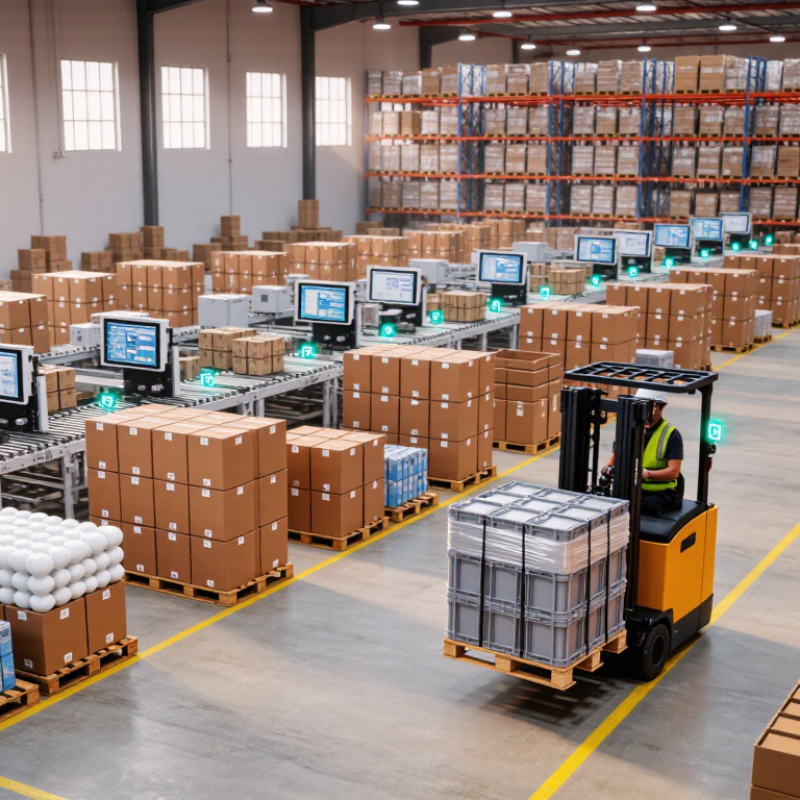
Industrial packaging is the system used to protect, contain, store, and move goods through production and distribution. It can include a corrugated shipping case, a reusable pallet, internal cushioning, and clear handling labels. Its purpose is practical: limit damage, make loads easier to handle, and keep products identifiable from factory floor to destination. The goal is simple. Packaging also affects storage space, labor, and waste, so choosing it by price alone can be shortsighted.
Core requirements depend on the product and its route. A heavy metal component may need a rigid crate and secure blocking; a moisture-sensitive part may need a sealed liner and desiccant. Consider weight, fragility, dimensions, stacking pressure, vibration, humidity, and expected handling. Verify that closures stay secure and labels remain readable after abrasion. Where possible, test a sample through realistic packing, stacking, and shipment conditions. A package that looks strong in a quiet warehouse may still fail during repeated transfers. No checklist catches every rough handoff, and that uncertainty deserves attention.
Tips: Measure the product and packed load, not just the item. Photograph a trial pack, record damage, and adjust cushioning or restraint. Ask handlers where packages are dropped or squeezed. Recheck assumptions when routes, materials, or storage conditions change.
What Are the Best Industrial Packaging Solutions in 2026? — Industrial Packaging: Definition, Purpose, and Core Requirements
Industrial packaging contains, protects, handles, stores, and transports goods through manufacturing and distribution. The best solution depends on the product, shipment conditions, handling system, regulatory needs, and end-of-life options.
| Packaging solution | Common materials and formats | Suitable applications | Primary benefits | Key requirements and trade-offs | End-of-life considerations |
|---|---|---|---|---|---|
| Corrugated fiberboard packaging | Single-, double-, or triple-wall cases; die-cut inserts; partitioned boxes | Cartoned components, appliances, e-commerce shipments, and general palletized goods | Lightweight, printable, available in many sizes, and compatible with automated packing and palletizing | Choose board strength and box design for product weight, stacking load, moisture exposure, and distribution hazards. It can lose strength when wet or crushed. | Often recyclable where clean, dry corrugated collection is available. Remove or separate non-paper components where required by local systems. |
| Reusable plastic containers | Rigid totes, stackable crates, lidded containers, and collapsible containers | Repeated shipments of parts between suppliers, factories, warehouses, and retailers | Durable, nestable or stackable designs can improve return logistics, and consistent dimensions support automated handling | Works best with a managed return loop. Account for cleaning, tracking, reverse transport, loss, storage, and the container’s weight. | Can be reused many times when maintained. At end of service, material identification and local recycling access affect recovery. |
| Flexible industrial packaging | Polyethylene or woven-polypropylene sacks, liners, FIBCs, stretch film, and shrink film | Powders, granules, agricultural materials, chemicals, and pallet stabilization | Low package weight, efficient storage before use, and formats suited to bulk handling or load containment | Select for fill method, product compatibility, required barrier properties, safe working load, lifting method, and exposure to puncture or weather. | Recycling depends on polymer type, cleanliness, coatings, and available collection programs. Reuse is appropriate only where inspection and handling procedures allow it. |
| Fiber drums and composite containers | Spiral-wound fiber drums with fitted closures, liners, or protective coatings | Dry powders, granules, and other compatible materials requiring a rigid, cylindrical container | Rigid body, practical stacking and handling, and lower container weight than many metal alternatives | Verify closure performance, moisture sensitivity, product compatibility, stacking needs, and any applicable transport or hazardous-material requirements. | Recycling or disposal depends on the drum construction, liners, coatings, contamination, and local facilities. |
| Steel or plastic drums | Closed-head or open-head drums, with closures selected for the contents | Liquids, pastes, and solids requiring a robust, closable container | Rigid containment and established handling formats; material selection can be matched to product and operating conditions | Check chemical compatibility, closure integrity, corrosion or impact risks, filling and emptying needs, and relevant transport rules. | Reconditioning or recycling may be possible when containers are empty and handled under appropriate cleaning and safety procedures. |
| Intermediate bulk containers (IBCs) | Rigid or composite tanks, commonly pallet-mounted, with valves and closures | Bulk liquids and compatible free-flowing materials moved in larger quantities than typical drums | Combines bulk capacity with forklift-compatible handling and can reduce the number of individual packages per shipment | Confirm capacity, product compatibility, valve and closure specifications, stacking limits, filling method, and applicable regulatory requirements. | Reusable or recyclable options depend on design, cleaning capability, contamination controls, and the return or collection system. |
| Protective transit packaging | Molded pulp, paper-based cushioning, foam, air cushions, corner protectors, and edge boards | Fragile, heavy, irregularly shaped, or impact-sensitive products inside a shipping package | Limits movement and helps reduce damage from shock, vibration, abrasion, and compression when correctly designed | Match cushioning and blocking to product fragility, package weight, transport hazards, and the available space. Validate with suitable distribution testing. | Recovery varies by material and local collection systems. Separate mixed materials when practical and follow local disposal guidance. |
| Metal crates and stillages | Welded steel or aluminum racks, baskets, and returnable transport frames | Heavy, high-value, bulky, or irregular components in closed-loop industrial supply chains | High durability, load-bearing capability, and potential for repeated use in controlled logistics networks | Consider tare weight, corrosion protection, safe lifting points, inspection, empty-return space, and loss prevention. | Designed for long service life; metal can generally be recovered through established scrap-metal channels when no longer usable. |
| Barrier and moisture-control packaging | Barrier films, foil laminates, sealed liners, desiccants, and vapor-phase corrosion-inhibiting materials | Moisture-sensitive, corrosion-sensitive, or shelf-life-sensitive products and components | Can help control exposure to moisture, oxygen, or corrosion when the package is properly sealed and specified | Define the required barrier, seal method, storage duration, temperature range, and compatibility with the product. Some multilayer materials are difficult to recycle. | Material layers and added components can limit recycling; choose a simpler construction where it meets protection needs and local recovery options. |
| Integrated pallet and unit-load systems | Wood, plastic, or paper pallets combined with cases, stretch wrap, strapping, and corner protection | Warehousing, forklift handling, and transport of grouped goods | Creates a stable handling unit and supports storage, loading, and movement with compatible equipment | Specify load dimensions, weight distribution, stacking stability, pallet condition, restraint method, and compatibility with conveyors and racking. | Wood pallets may be repaired or recovered; reusable plastic pallets require a return system. Wrap and strapping recovery varies by material and location. |
Selection checklist: Confirm product compatibility, protection level, package and load dimensions, handling equipment, transport conditions, applicable regulations, total logistics cost, reuse potential, and locally available recovery routes. Performance and compliance depend on the specific design and use conditions.
Related Posts
-

10 Essential Tips for Enhancing Your Industrial Packaging Strategy
-

How to Choose the Right Case Packing Machine for Your Business?
-
The Future of Liquid Packaging Machines in Sustainable Manufacturing Solutions
-

Top 10 Food Packaging Machine Manufacturers in China?
-
How to Choose the Best Coffee Packaging Machine for Your Business Needs
-
2026 How to Choose the Best Bag Sealing Machine?