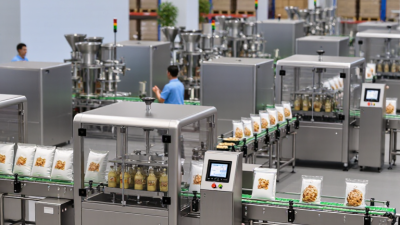
Top 10 Food Packaging Machine Manufacturers in China?
China has a broad food packaging equipment sector, serving small workshops and high-volume factories. Buyers can find machines for filling, sealing, wrapping, labeling, and forming pouches. Yet a polished product page does not prove a machine will suit a production line. Details matter. A pouch may wrinkle, a seal may leak, or a conveyor may slow an otherwise efficient process.
This guide introduces ten food packaging machine manufacturers in China and offers a starting point for comparison. It considers product range, customization, production experience, technical support, and the clarity of available specifications. These are practical indicators, not a guarantee of performance. A buyer should confirm output rates, compatible package materials, changeover time, cleaning requirements, and spare-parts availability directly with each supplier. Ask for a product demonstration or sample test using the actual food and packaging format whenever possible.
No ranking is perfect. Company capabilities and service coverage can change, while public information may leave important questions unanswered. Request current machine drawings, operating videos, and written warranty terms before making a decision. Check that food-contact components suit the intended application, and confirm applicable safety and documentation requirements for the destination market. A lower purchase price may look attractive, but installation, training, maintenance, and downtime also affect total cost. Use this list to narrow the field, then verify each claim against your own production needs.
Overview of China's Food Packaging Machinery Industry
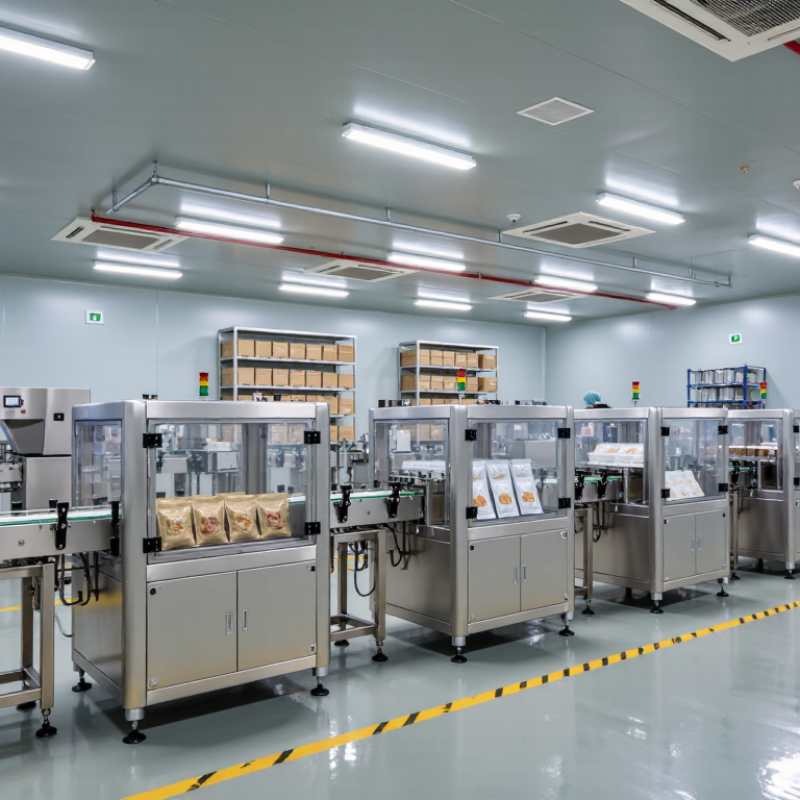
China’s food packaging machinery industry is shaped by large-scale food production and rising demand for consistent, traceable packing. The China Packaging Federation reported that packaging enterprises above designated size generated RMB 1,153.9 billion in operating revenue in 2023. This figure covers the wider packaging sector, not food machinery alone. That distinction matters.
On factory floors, demand centers on filling, sealing, weighing, labeling, and inspection equipment. Lines may handle sticky sauces, fine powders, or fragile baked goods, each requiring different contact surfaces and changeover settings. The International Federation of Robotics reported 276,288 industrial robot installations in China in 2023, equal to 51% of global installations. These figures cover all industries, not food packaging specifically, but they show the scale of China’s automation environment.
Equipment makers are also responding to shorter production runs and more varied package formats. Quick-clean designs and adjustable controls can reduce changeover time, though performance depends on product and operator training. Industry comparisons remain imperfect: public statistics rarely separate food packaging machinery from broader machinery categories. More transparent, segment-level reporting would make capacity and investment trends easier to assess.
Criteria for Selecting the Top 10 Manufacturers
A credible comparison of China’s food packaging machine manufacturers should begin with measurable performance, not catalogue claims. FAO’s 2023 SDG progress report estimated that 13.2% of food was lost between harvest and retail in 2021. Packaging cannot prevent every loss, but reliable sealing, accurate filling, and stable line speeds can reduce avoidable damage and leakage. Ask manufacturers for test results using your actual product, film, and target pack size.
Score each supplier on fill accuracy, sustained output, changeover time, sanitation access, spare-parts availability, and service response. Request a factory acceptance test and record rejects per thousand packs, not just the advertised maximum speed. Check whether food-contact materials and cleaning procedures are documented, and confirm that operators can reach product-contact areas without awkward disassembly. Small details matter. A hard-to-clean corner can become a daily problem.
For a fair top-ten assessment, use the same questions and weighting for every candidate. Review several months of production records where possible, then speak with reference customers running comparable products. Ask how the machine performs after a full shift, not only during a polished demonstration. That sounds tidy. Reality isn’t. Some buyers may still give too much weight to purchase price; the cheaper line can cost more when downtime, changeovers, and maintenance are included.
Top 10 Food Packaging Machine Manufacturers in China? - Criteria for Selecting the Top 10 Manufacturers
Suggested evaluation framework for comparing manufacturers. Weights are illustrative and should be applied consistently using current, verifiable evidence; they do not represent rankings of specific companies.
| Evaluation criterion | Weight | Evidence to review | What a strong result looks like |
|---|---|---|---|
| Food-contact materials and hygiene design | 15% | Material specifications, food-contact declarations where applicable, cleaning instructions, and machine layout. | Materials and design are documented for the intended food and destination market; product-contact areas are accessible for cleaning and inspection. |
| Packaging performance and accuracy | 14% | Acceptance-test results for fill weight or count, seal quality, reject rate, and repeatability using the buyer’s product and packaging. | Performance is demonstrated against agreed tolerances under defined test conditions, rather than relying only on a brochure’s maximum figures. |
| Speed and production capacity | 12% | Rated output, tested output, changeover time, and operating conditions for the relevant product and pack format. | The proposed line meets the required sustained throughput with clear assumptions about product, film or container, staffing, and uptime. |
| Machine range and customization capability | 10% | Available machine types, compatible pack formats, line-integration drawings, and examples of configured solutions. | The supplier can match the required process and formats, and clearly identifies custom work, interfaces, and scope boundaries. |
| Quality management and manufacturing controls | 10% | Current quality-system documentation, inspection and test records, traceability practices, and factory-audit findings. | Quality procedures are documented and supported by records; any certification is checked for scope, validity, and issuing body. |
| Safety and destination-market compliance | 10% | Risk assessment, guarding and emergency-stop design, electrical documentation, and compliance documents required in the target market. | The machine configuration is assessed against applicable local requirements, with supporting technical documents available for review. |
| After-sales service and spare-parts support | 10% | Service response commitments, remote-support process, technician availability, spare-parts list, and warranty terms. | Support responsibilities and response targets are written into the quotation or contract, with critical spares identified. |
| Customization, controls, and integration | 7% | Control-system specifications, communication interfaces, recipe management, and integration plans for upstream and downstream equipment. | Interfaces and responsibilities are defined, and the proposed controls suit the plant’s operating and maintenance requirements. |
| Total cost of ownership and delivery reliability | 7% | Itemized quotation, installation and training scope, energy and consumable requirements, lead time, and payment milestones. | Costs, exclusions, delivery schedule, and commissioning requirements are transparent and comparable across proposals. |
| Reference checks and technical transparency | 5% | Relevant customer references, factory-test access, sample-run records, manuals, and responsiveness to technical questions. | Claims can be independently checked, and the supplier provides clear documentation and a practical route to validate performance. |
| Total suggested weighting | 100% | Score each candidate against the same evidence requirements and machine application. | |
Profiles of 10 Leading Food Packaging Machine Manufacturers in China
China’s food-packaging machinery makers serve plants handling snacks, baked goods, dairy products, frozen foods, and prepared meals. MarketsandMarkets’ 2023 Packaging Machinery Market report valued the global market at US$45.4 billion and projected US$58.9 billion by 2028. That global figure gives useful context, but it does not measure China’s food-machine sales alone. Buyers should compare manufacturers by product fit, line integration, and after-sales support, not headline speed.
A useful ten-profile comparison spans distinct capabilities. One supplier specializes in vertical form-fill-seal systems for snack bags; another builds horizontal wrappers for bakery products. Others focus on cup filling, tray sealing, vacuum packing, canning, cartoning, case packing, robotic palletizing, and integrated inspection. Details matter. Ask for test runs using the actual product and packaging film, then check seal quality, changeover time, and reject rates. Stainless-steel contact surfaces and accessible washdown points matter in wet processing areas. Published performance figures can omit downtime between product formats. That gap deserves scrutiny. A careful profile should also distinguish standard machines from custom-built lines and state what commissioning and operator training include.
Key Products and Technologies Offered by These Manufacturers
Chinese food-packaging machine manufacturers commonly supply vertical and horizontal form-fill-seal systems, premade-pouch equipment, vacuum packers, and tray sealers. For dry products, auger fillers and multihead weighers meter powders, grains, or snacks into bags. Liquid lines may use piston or pump fillers, with heated sealing jaws to help control leaks. Some systems add modified-atmosphere gas flushing, date coding, and checkweighing. Small details matter.
Tips: Ask for a product trial using your actual food and packaging film. Check changeover time, cleaning access, seal consistency, and spare-part availability—not just quoted speed. Request sample packs and see how operators adjust settings.
Many suppliers integrate servo drives, PLC controls, touchscreens, sensors, and vision inspection. These tools can improve repeatability, but results depend on film quality, product shape, and operator training. A compact line may suit a small workshop, while larger plants often need conveyors, metal detection, and automatic case packing. Specifications can look impressive on paper; factory acceptance tests and clear maintenance records offer better evidence. Some limits only appear after weeks of use, so plan for routine checks and realistic service support.
Factors to Consider When Comparing Manufacturers
When comparing food packaging machine manufacturers in China, start with product and package fit, not headline speed. Ask whether the machine handles your actual film, pouch dimensions, fill temperature, and product texture. Free-flowing powder behaves differently from sticky sauce or fragile snacks. Request a trial using your own product and packaging material. Watch seal consistency, misfeeds, and changeover time during a realistic run. Brochure figures can look precise. They may not reflect your line.
Check construction and cleaning access closely. Look at welds, guards, contact surfaces, and areas where crumbs or liquid could collect. Ask for material specifications, electrical drawings, operating manuals, and a clear list of routine replacement parts. Service matters, too. Confirm response hours, remote troubleshooting options, technician availability, and delivery times for critical components. Compare total ownership costs, including installation, training, utilities, and maintenance, rather than purchase price alone. A fast machine can still become a bottleneck if feeding or labeling cannot keep pace. Small details matter.
Request references from similar applications, but verify what is genuinely comparable: product, shift pattern, and operating conditions. Review acceptance criteria before ordering, with measurable checks for output and seal quality. Ask how the supplier handles software updates and operator training. No checklist catches everything. Leave room for another technical review; details are easy to miss when timelines are tight.
Related Posts
-
Top 10 Food Packaging Machine Manufacturers in China
-
China Top Food Packaging Machine Suppliers?
-
2026 How to Choose the Best Bag Sealing Machine?
-
Exploring Liquid Filling Machine Innovations at the 138th Canton Fair 2025
-
Quality Chinese Manufacturing and the Rise of the Best Sealing Machine in the Global Market
-
How to Choose the Best Powder Filling Machine for Your Business Needs