BLOG

10 Best Food Packaging Machines for Global Buyers

Choosing a food packaging machine is a practical decision with long-term consequences. The right system must match the product, package format, production speed, and available floor space. A small bakery filling stand-up pouches has different needs from a frozen-food plant sealing trays. Details matter. So does cleaning time.

Packaging educator and author Walter Soroka describes packaging as “the science, art and technology of enclosing or protecting products for distribution, storage, sale, and use.” That broad purpose helps explain why buyers should assess more than a machine’s advertised speed. Consider seal consistency, changeover time, operator training, maintenance access, and compatibility with the materials you plan to use. Ask suppliers for product-specific trials and clear performance data. Not every line fits. A machine can look impressive on paper yet prove awkward beside an existing conveyor.

This guide compares 10 food packaging machine types for global buyers, including options for filling, sealing, wrapping, and labeling. It highlights common applications, useful features, and trade-offs to discuss with suppliers. Requirements vary by product and facility, so no single model is best for every operation. Some details may deserve a second look after testing. Use the list as a starting point, then confirm capacity, service support, and installation needs directly with the manufacturer.
10 Best Food Packaging Machines for Global Buyers

How Food Packaging Machines Fit Into Modern Production

10 Best Food Packaging Machines for Global Buyers
How Food Packaging Machines Fit Into Modern Production

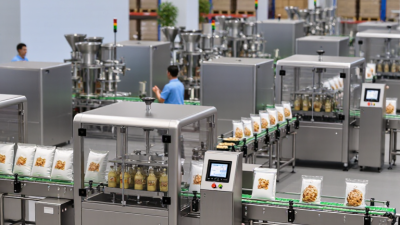
Food packaging machines work best as parts of a coordinated production line, not isolated purchases. A multihead weigher may portion snacks into pouches, while a vertical form-fill-seal machine shapes, fills, and closes each pack. For sauces, a liquid filler must match the container, product thickness, and required output speed. Small delays add up.

Upstream equipment matters too. Conveyors need to deliver products steadily, and checkweighers can flag packs outside a set weight range. Labelers and date coders must fit the line’s pace without creating bottlenecks. Sensors, guarded moving parts, and accessible cleaning points help operators manage routine work. Still, automation cannot correct poor product flow or careless setup.

Before choosing equipment, buyers should map the full process: product, package material, changeover frequency, available floor space, and staffing. Ask how long a format change takes, which parts need regular adjustment, and what happens when a sensor detects a fault. A polished speed figure may describe ideal conditions, not a real shift. That distinction matters. Small trial runs can reveal awkward handoffs, trapped crumbs, or seals that need adjustment before a machine becomes central to production.

The Main Types of Food Packaging Machines

Food packaging machines generally fall into several practical groups. Form-fill-seal machines shape film, dose product, and close each pack in one cycle. They suit snacks, powders, and some liquids, but film changes can slow a line. Filling and sealing machines handle cups, bottles, trays, or pouches. For fresh products, vacuum and modified-atmosphere systems remove or adjust air before sealing. Cartoners, case packers, and palletizers move sealed packs into distribution units. Labelers and checkweighers support identification and weight control.

The choice depends on product texture, pack material, output, and cleaning needs. A sticky sauce needs different dosing equipment from dry cereal. A small pouch line may save floor space, yet frequent changeovers can erase that advantage. One uncomfortable point: faster is not always better. Operators still need safe access for cleaning and maintenance.

Packaging also has limits. FAO’s 2019 State of Food and Agriculture estimated that 14% of food is lost between harvest and retail. UNEP’s Food Waste Index Report 2024 estimated 1.05 billion tonnes of food waste in 2022. These figures cover different stages and do not prove that packaging machines alone prevent waste. They do, however, make seal integrity and suitable pack sizes worth checking during equipment selection. A trial with the actual product is often more revealing than a catalogue specification.

10 Best Food Packaging Machines for Global Buyers – The Main Types of Food Packaging Machines

Machine Type Primary Function Common Food Applications Typical Packaging Formats Key Buying Consideration
Vertical Form-Fill-Seal (VFFS) Machine Forms a bag from a roll of film, fills it with product, and seals the package vertically. Grains, snacks, powders, frozen foods, and small pieces of produce. Pillow bags, gusseted bags, and some block-bottom bags, depending on the machine and tooling. Check product flow, portioning method, film compatibility, and the bag styles required.
Horizontal Form-Fill-Seal (HFFS) Machine Forms, fills, and seals packages while products move horizontally through the machine. Biscuits, confectionery, bakery items, and other discrete products. Flow wraps, sachets, and other flexible packages, depending on configuration. Confirm that product size, shape, and feed orientation suit the machine’s infeed system.
Premade Pouch Filling and Sealing Machine Opens preformed pouches, fills them, and seals their openings. Sauces, snacks, coffee, pet food, and ready-to-eat foods. Stand-up pouches, flat pouches, and zipper pouches when supported by the equipment. Verify pouch dimensions, closure requirements, filling method, and whether the product is liquid, powder, or solid.
Vacuum Packaging Machine Removes air from a package before sealing to reduce oxygen exposure inside the pack. Meat, fish, cheese, coffee, and other products suited to vacuum packaging. Vacuum pouches, bags, and, on some systems, trays with compatible films. Choose a chamber or continuous system based on throughput, product shape, and packaging material.
Modified Atmosphere Packaging (MAP) Machine Replaces or adjusts the air in a package with a selected gas mixture before sealing. Fresh meat, poultry, seafood, prepared foods, and some fresh produce. Sealed trays, thermoformed packs, or compatible flexible packages. Gas composition, film barrier properties, seal integrity, and product testing are essential to package performance.
Tray Sealing Machine Applies a lidding film to trays and seals it around the tray flange. Ready meals, fresh produce, meat, seafood, and deli foods. Preformed trays with sealed, peelable, or modified-atmosphere lidding, depending on the system. Match tray material and dimensions to the tooling, and specify whether MAP or vacuum functions are needed.
Thermoforming Packaging Machine Heats and forms packaging film into cavities, loads the product, then seals and cuts the finished pack. Meat, cheese, seafood, and other products packaged in formed compartments. Rigid or flexible formed packs, including vacuum and MAP formats on suitable configurations. Assess forming depth, material requirements, changeover needs, and the available production-floor space.
Filling and Capping Machine Measures and dispenses product into containers, then applies closures. Beverages, dairy products, cooking oils, sauces, and liquid foods. Bottles, jars, and other compatible rigid containers with screw caps or other closures. Select the filling method according to product viscosity, foaming behavior, container type, and required accuracy.
Can Seaming Machine Joins a can end to the can body by mechanically forming a double seam. Canned vegetables, fruit, soups, seafood, and other shelf-stable foods. Metal cans with compatible ends and dimensions. Ensure the machine matches the can and end specifications; seam inspection is important for package integrity.
Cartoning Machine Forms or loads cartons, inserts products, and closes the cartons. Cereal, tea, confectionery, frozen foods, and multipacks of packaged products. Folding cartons and other carton styles supported by the machine. Check carton dimensions, loading direction, product presentation, and integration with upstream equipment.

Ten Leading Machines for Different Foods and Packaging Formats

Food type should guide the machine choice, not the other way around. Vertical form-fill-seal machines suit loose snacks and frozen vegetables, while horizontal flow wrappers protect bars and baked goods. Thermoformers shape film around sliced meat or cheese; tray sealers close ready meals in rigid trays. Vacuum-chamber machines remove air from suitable products, but delicate foods may need gentler handling. Small details matter.

For powders, auger fillers meter flour or spices; piston fillers handle thicker sauces, while liquid fillers suit pourable products. Cup-filling and sealing machines package yogurt or desserts, and cartoners or case packers prepare finished packs for shipping. PMMI’s 2023 State of the Industry report projected U.S. packaging machinery shipments would reach $11.2 billion by 2027, reflecting ongoing investment across packaging formats. The FAO reported that 13.2% of food was lost between harvest and retail in 2021. Packaging is not the only remedy, but a suitable format can help protect products during handling. A line that looks efficient on paper can still struggle with sticky sauce, fragile produce, or frequent size changes; testing with the actual product matters.

10 Best Food Packaging Machines for Global Buyers

Ten leading machine types for different foods and packaging formats

The bars count the common package-format examples named for each machine type—not machine models, production capacity, market share, or a performance ranking. Actual compatibility depends on the machine configuration, product, and packaging materials.

How to Compare Speed, Capacity, Automation, and Packaging Materials

Comparing food packaging machines starts with the product, not the headline speed. Ask suppliers to run your actual food and packaging film, then record usable packs per minute. A machine may reach its quoted rate with empty trays, yet slow down when handling sticky fillings or frequent changeovers. Watch for seal wrinkles, uneven portions, and rejected packs during a sustained trial. Small details matter.

Capacity should match both today’s demand and realistic growth. Check hopper size, line footprint, operator access, and cleaning time between products. A large hopper is not automatically better if ingredients settle or require frequent stirring. Automation can reduce repetitive handling, but sensors, recipe controls, and fault alerts need clear instructions and accessible support. Ask how long routine adjustments take, and who can train your operators. Not always simple.

Packaging materials can limit performance as much as machine design. Confirm compatibility with your chosen film, pouch, tray, or lidding material, including thickness and sealing range. Request sample packs and inspect them after storage and transport simulations. A neat seal at the factory is only one part of the test. I would also compare changeover time, spare-part availability, and cleaning procedures in writing. One overlooked setup step can disrupt a whole shift, so leave room for practical trials before committing.

What Global Buyers Should Check Before Purchasing a Machine

Before purchasing a food packaging machine, define the product and package it must handle. A machine suited to dry powder may not manage sticky pieces or fragile snacks well. Ask for a test using your actual product, film, and target pack size. Check seal strength, fill accuracy, and speed during the same run. A neat sample matters. So does a steady run after several hours.

Tips: Request a video or live acceptance test. Measure changeover time between package sizes. Confirm cleaning steps, spare-part availability, operator training, and local service support in writing. Small details count.

Check the installation requirements before comparing prices. Confirm floor space, power supply, compressed air needs, and connection points. Voltage and plug standards can differ across facilities, so verify them with a qualified technician. Review the machine’s food-contact materials and ask how operators can access areas that need regular cleaning. A quick demonstration may not reveal awkward corners. I have seen buyers focus on rated speed, then find that frequent changeovers reduce real output. That deserves a closer look. Compare the total cost of ownership, including setup, maintenance, consumables, and downtime—not only the purchase price.

Get in touch

Our goal is to provide you with excellent customer service while meeting all of your packaging automation needs. We provide the peace of mind that comes from working with one manufacturer, one service department and one point of contact.