What Is Ceremonial Matcha?
Ceremonial Matcha is often introduced as the finest grade of Japanese green tea, but that description needs care. Japan’s Ministry of Agriculture, Forestry and Fisheries tracks tea production and distribution, yet its public statistics do not establish one universal “ceremonial grade.” The label is mainly a market convention, so products carrying it can differ in leaf selection, milling, freshness, and taste. The wording sounds definitive. The standard is not.
This article explains how matcha is grown, shaded, steamed, dried, and stone-milled into a vivid green powder. It also examines what distinguishes a bowl intended for whisking with water: a fresh aroma, fine texture, and balanced sweetness with gentle bitterness. A reputable report can describe market growth, but market size alone cannot verify what is inside a tin. Buyers should check the producer, harvest details, packaging, and storage guidance. Tiny details matter.
Tea scholar Kakuzō Okakura wrote, “Tea began as a medicine and grew into a beverage.” His line comes from The Book of Tea, not a modern grading manual, but it points to tea’s long cultural history. Ceremonial Matcha is best understood through both that history and the cup itself. A useful test is simple: sift the powder, whisk it with warm water, and notice its color, aroma, and finish. Even then, preference matters. A label cannot promise that every bowl will taste perfect.
Definition and Japanese Tea Context: Matcha Is Powdered, Shade-Grown Tencha
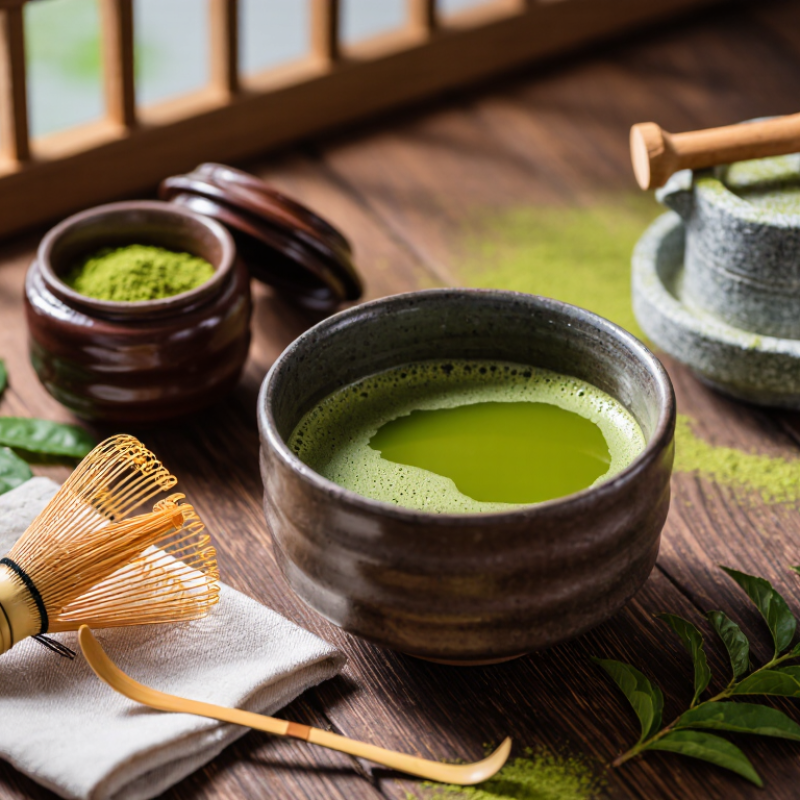
Matcha is powdered green tea made from tencha, not simply any green tea ground into dust. Before harvest, tea bushes are shaded, often for several weeks. The young leaves are steamed, dried without rolling, and stripped of stems and veins. The resulting tencha is slowly stone-milled into a fine powder. It feels soft between the fingers and turns vivid green when whisked with water. Almost.
The Japanese Ministry of Agriculture, Forestry and Fisheries recorded about 4,176 tonnes of tencha production in its 2022 crop statistics. That figure describes tencha, not all matcha sold worldwide. “Ceremonial” is commonly used in commerce, but it is not a single official Japanese grade with one universal standard. Harvest timing, cultivar, processing, and storage all affect flavor. A pale, grassy cup may suit whisking; a more robust powder can taste better in milk. Labels alone cannot tell the whole story.
Tips: For a simple check, sift a small amount before whisking; clumps are common. Use fresh, cool-to-warm water rather than boiling water, which can make bitterness more noticeable. Smell the dry powder, too. A dull or stale aroma deserves a second thought.
Quality and Grading: “Ceremonial Grade” Has No Universal Legal Standard
Ceremonial matcha usually describes finely milled green tea intended to be whisked with water and enjoyed on its own. The label suggests a delicate flavor, smooth texture, and bright color. Yet “ceremonial grade” has no universal legal standard. That matters. One seller may use it to indicate a particular harvest or careful processing; another may apply it according to its own criteria. The phrase alone cannot guarantee quality.
Look beyond the grade name. Check whether the seller explains the tea’s origin, harvest, processing, and storage. A fine powder should feel silky between your fingers, while its aroma may suggest fresh greens rather than stale hay. Color can offer a clue, but it is not proof: lighting, age, and storage all affect appearance. Whisk a small amount with warm water and notice its bitterness, sweetness, and texture. Even careful tasting has limits. Ask for specific details when the label is vague, and treat broad quality claims with curiosity. No label tells the whole story.
Traditional Preparation: Whisk 1.5–2 g Matcha with 60–70 mL Water
Ceremonial matcha is finely milled green tea prepared with care and served simply, often with water alone. The term describes a style of use, though grading language can vary between sellers. For a balanced bowl, measure 1.5–2 grams of matcha and 60–70 milliliters of water. A small kitchen scale helps keep the proportions steady. Sift the powder into a dry bowl to break up clumps. It takes only a moment.
Use hot, not boiling, water; roughly 70–80°C is a practical starting point. Pour it over the powder, then whisk briskly with a bamboo whisk, moving your wrist in a loose W shape. Keep the whisk near the surface near the end to build a fine layer of foam. The result should look vivid green and feel smooth, not gritty. If it tastes too strong, add a little water next time rather than changing several things at once. Foam is not a perfect measure of quality, and a few uneven bubbles are normal. The process rewards attention, but it need not look flawless.
What Is Ceremonial Matcha?
Traditional preparation uses 1.5–2 g of matcha with 60–70 mL of water.
The chart shows the derived water-to-matcha ratio range: 30–46.7 mL per gram, calculated from the recipe’s endpoint amounts (60 ÷ 2 and 70 ÷ 1.5). Whisk the matcha and water together until smooth and lightly frothy.
Caffeine and Composition: Matcha Typically Contains About 19–44 mg Caffeine per Gram
Ceremonial matcha is finely milled green tea prepared for whisking and drinking. The word “ceremonial” suggests a style intended for plain preparation, not a universally fixed grade. Its caffeine content can be easier to understand per gram than per cup. Matcha typically contains about 19–44 milligrams of caffeine per gram, though leaves and processing methods differ. A serving with two grams could therefore provide roughly 38–88 milligrams. That is an estimate, not a promise. A small kitchen scale helps make the amount more consistent, while a heaped scoop can vary.
Matcha is unusual because you drink the powdered leaf rather than steeping and removing it. The caffeine in the measured powder therefore goes into the bowl, although serving size matters. Cultivar, harvest, and growing conditions can shift the final amount. So can preparation habits. A thin, lightly whisked bowl and a stronger one may use different quantities. The bright green foam and grassy aroma are easy to notice; the caffeine dose is less visible. It is worth checking how much powder you actually use, especially if caffeine affects your sleep or makes you feel jittery. “Ceremonial” alone does not tell you the precise caffeine level.

 English
 Français
 Español
 Deutsch