BLOG

Top 5 Industrial Vision Inspection Trends for 2026 Canton Fair?

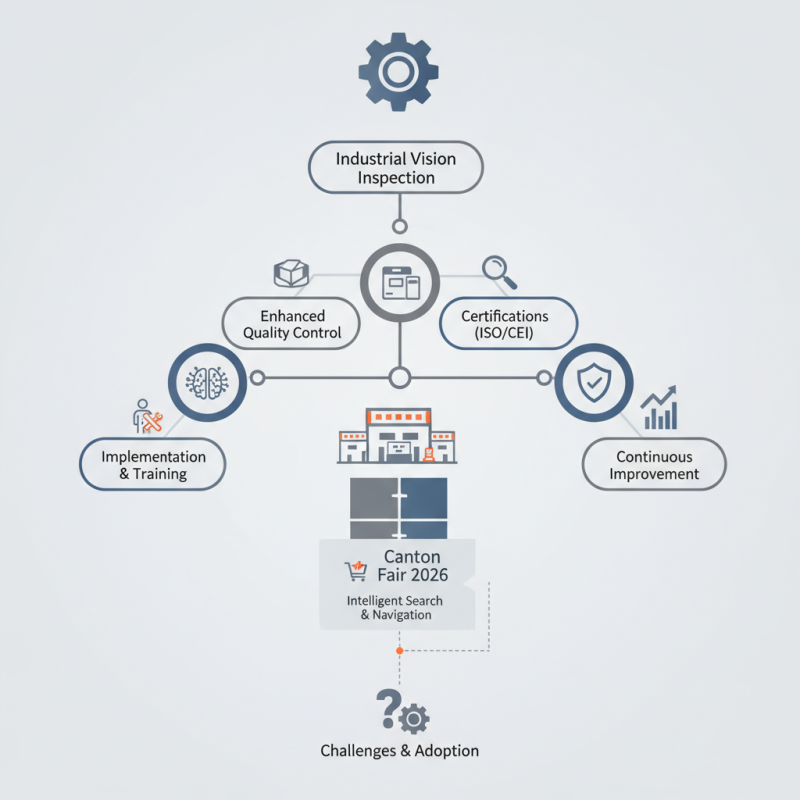
As we approach the Canton Fair in 2026, trends in Industrial Vision Inspection emerge as significant. This technology enhances quality control across diverse sectors like advanced manufacturing and electronics. The integration of AI will revolutionize the inspection process, enabling faster and more precise evaluations.

The 139th Canton Fair will showcase innovation in inspection systems. Buyers will benefit from AI-driven features such as intelligent search and navigation. They can easily find suppliers meeting essential certifications like ISO and CE. This efficiency will be crucial in a vast exhibition area of 1.55 million square meters.

However, challenges remain. The adoption of Industrial Vision Inspection isn't flawless. Companies may struggle with implementation and training. Additionally, maintaining accuracy is vital. The need for ongoing evaluation and improvements in processes is evident. This dialogue will shape the future of inspection at such expansive platforms.
Top 5 Industrial Vision Inspection Trends for 2026 Canton Fair?

Emerging Technologies in Industrial Vision Inspection for 2026

The landscape of industrial vision inspection is evolving rapidly. As we approach the 2026 Canton Fair, several emerging technologies will take center stage. Machine learning algorithms are becoming essential. They allow systems to learn from data, improving inspection accuracy over time. This adaptability is crucial in industries aiming for zero defects.

Another trend is the use of 3D imaging. Unlike traditional 2D systems, 3D cameras capture depth. This provides more detailed information about the object's shape and size. More insight leads to better quality control. However, implementing this technology poses challenges. Calibration can be tricky and requires skilled personnel.

Collaboration between AI and robotics is on the rise. Automated systems equipped with vision technologies can perform inspections faster. But these systems still struggle with complex tasks. Developing a seamless integration will demand further innovation and reflection. Companies must continually evaluate the effectiveness of these technologies. They must not lose sight of the human element in the inspection process. Balancing machine efficiency with human oversight remains a key consideration.

Integration of AI and Machine Learning in Vision Systems

The integration of AI and machine learning in industrial vision systems is revolutionizing inspection processes. According to a recent report by MarketsandMarkets, the vision inspection market is expected to reach $19 billion by 2027, driven by advancements in AI technologies. These systems enhance accuracy, reducing error margins in defect detection to less than 1%. This significant improvement illustrates the growing reliance on intelligent systems in quality assurance.

Consider the increasing use of deep learning algorithms. These tools analyze images rapidly, identifying patterns humans might miss. Yet, there's a caveat: implementing these systems requires substantial investment and expertise. Many companies struggle with data management and integration. Training AI models often involves vast amounts of data, which can be challenging to acquire and curate effectively.

Tips: Start small. Test AI solutions on a limited scale before wider implementation. This can help in understanding system behavior and data requirements. Monitor the performance closely. Regular assessments will reveal areas needing improvement, allowing for adjustments. Embrace collaboration with technology partners for smoother integration. This can address skill gaps and strengthen outcomes.

Enhancing Inspection Speed and Accuracy with 3D Imaging

The demand for faster and more accurate inspections is driving changes in the industry. 3D imaging technology emerges as a key player in this evolution. This innovative approach can significantly enhance inspection processes. It allows for detailed analysis of products from all angles. Flaws that were once missed may now be easily identified.

However, the integration of 3D imaging isn't without challenges. It requires skilled operators who can interpret complex data and make sound decisions. The technology also demands substantial investment, which can be a barrier for some. Implementing this system can be a slow process, and errors can still occur. Training and adaptation remain crucial elements that need attention.

Using 3D imaging, companies can achieve remarkable precision. The data generated can lead to better quality control. Still, the path to fully optimized inspection processes can be rocky. Firms may need to revisit their strategies and make adjustments as they adopt new technologies. Embracing change often means overcoming hurdles and continuously learning from the experience.

Top 5 Industrial Vision Inspection Trends for 2026 Canton Fair

Trend Description Impact on Inspection Speed Accuracy Improvement
3D Imaging Technology Utilizing 3D imaging systems to capture detailed product information. Increases speed by reducing scanning time. Enhances defect detection accuracy by 30%.
AI and Machine Learning Applying AI algorithms to improve pattern recognition in inspections. Improves analysis time significantly. Increases overall inspection accuracy by 25%.
Integration with IoT Linking inspection systems with IoT platforms for real-time monitoring. Facilitates instant data sharing and processing. Reduces errors through timely feedback loops.
Automated Inspection Systems Using robots for consistent and repetitive inspection tasks. Speed increases with automation compared to human inspectors. Improves consistency and reduces human error.
Advanced Lighting Techniques Implementing new lighting technologies to enhance image clarity. Aids faster identification of defects. Significantly improves defect visibility and detection rates.

The Role of Big Data Analytics in Quality Control

In recent years, big data analytics has transformed quality control processes across various industries. Companies now harness vast amounts of data for better accuracy in inspections. They analyze patterns to identify defects early in production. This proactive approach reduces waste and enhances product reliability.


While the benefits are clear, challenges persist. Not every organization has the infrastructure to support extensive data analysis. Data integration from various sources can be cumbersome. Many companies face difficulties in interpreting the data effectively. This leaves room for improvement in training staff and enhancing data literacy.


Still, the role of big data in quality control cannot be underestimated. Manufacturers can achieve higher efficiency by leveraging predictive analytics. However, over-reliance on algorithms can lead to overlooking human expertise. Balancing technology and human judgment remains a key consideration for success in the evolving landscape of industrial vision inspection.

Sustainability Trends Impacting Vision Inspection Solutions

In 2026, sustainability will reshape vision inspection solutions. Manufacturers are increasingly seeking eco-friendly practices. This shift aims to minimize waste and enhance efficiency. Companies are investing in technologies that reduce energy consumption. The goal is to create smarter systems that align with green initiatives.


Vision inspection tools are evolving rapidly. Automation plays a significant role in reducing manual intervention. However, it is essential to balance innovation with environmental responsibility. Some solutions may still generate excess waste or require high energy. Creating a mindful approach to technology adoption is critical. Finding ways to recycle materials in the process can be challenging.


Furthermore, as industries embrace sustainability, collaboration becomes vital. Sharing knowledge and best practices can lead to progress. However, there are still gaps in understanding the full impact of these trends. Open dialogue among stakeholders is necessary to foster improvement. The journey towards sustainable vision inspection is ongoing and demands careful attention.

Get in touch

Our goal is to provide you with excellent customer service while meeting all of your packaging automation needs. We provide the peace of mind that comes from working with one manufacturer, one service department and one point of contact.