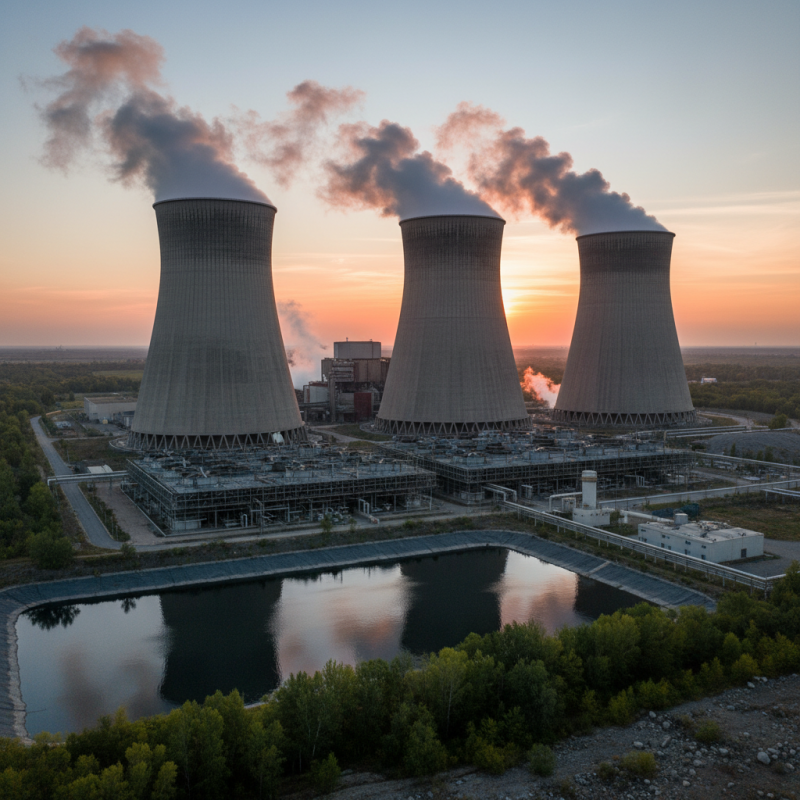
What is a cooling tower and how does it work?
cooling towers play a crucial role in modern industrial processes. They help dissipate waste heat from various systems. In fact, the global cooling tower market size was valued at approximately $3.1 billion in 2020, with a projected growth rate of 4.4% from 2021 to 2028. This indicates their rising importance across sectors.
Understanding how a cooling tower operates is essential for efficient system performance. These structures use evaporation to reduce temperature, making them key in power plants and HVAC systems. However, they are not without challenges. Issues like scaling and corrosion can affect their efficiency significantly. Regular maintenance is vital but often neglected, leading to suboptimal performance.
Moreover, as industries strive for sustainability, cooling towers face new demands. They must balance efficiency with ecological considerations. The necessity to innovate and enhance designs is clear. As we delve deeper into the working principles of cooling towers, understanding their complexities and limitations will provide insights into potential improvements.
What is a Cooling Tower? Definition and Purpose Explained
A cooling tower is a specialized structure. Its main purpose is to remove heat from a system. Water is typically circulated through a cooling tower. This eliminates excess heat, keeping machinery cool.
In essence, the cooling process works through evaporation. Warm water is allowed to flow through the tower. As it descends, air is introduced. This causes some water to evaporate. The result? Cooler water collects at the bottom. Yet, not every system works perfectly. Sometimes, dust and debris can hinder efficiency. Regular maintenance is crucial to ensure optimal function.
Understanding cooling towers is vital. They support various industries, from power generation to HVAC systems. Each application may pose unique challenges. Poor design can lead to inefficiencies. It's essential to reflect on how cooling towers operate in different environments.
What is a Cooling Tower and How Does it Work?
| Dimension | Description |
|---|---|
| Definition | A cooling tower is a structure designed to remove heat from a building or industrial processes by transferring it to the atmosphere. |
| Purpose | To regulate temperature and improve efficiency in systems requiring cooling, such as HVAC systems and power plants. |
| Types | Types of cooling towers include natural draft, mechanical draft, and hybid systems. |
| Operation Principle | The cooling process involves evaporative cooling, where water absorbs heat and some of it evaporates, reducing the water temperature. |
| Applications | Commonly used in power generation, petrochemical plants, refrigeration, and commercial building cooling. |
| Advantages | Energy efficiency, cost-effectiveness, and environmental benefits by reducing energy consumption in cooling processes. |
| Maintenance | Regular maintenance is vital for preventing issues such as scale buildup, corrosion, and reducing operational efficiency. |
Types of Cooling Towers: Open, Closed, and Hybrid Systems Overview
Cooling towers are essential for dissipating heat from industrial processes. They come in three main types: open, closed, and hybrid systems. Each type serves a specific purpose and operates differently.
Open cooling towers use water to absorb heat. The warm water is released into the tower, where it comes into contact with air. This interaction causes evaporation, cooling down the water. The cooled water then circulates back to the system. However, this method can lead to water loss and requires constant maintenance to prevent issues.
Closed cooling towers offer a different approach. They circulate water within a closed system, preventing evaporation. Heat exchangers are used to transfer heat between the process and the ambient air. This design reduces water loss and minimizes the risk of contamination. Yet, it may be more complex and expensive to set up. Hybrid systems combine elements of both types. They can switch between open and closed operation, adapting to varying conditions. This flexibility provides efficiency and resilience but might complicate the system's management.
Each cooling tower type has its pros and cons. The choice depends on specific needs and operational conditions. It's crucial to evaluate all options carefully to ensure optimal performance.
How Cooling Towers Operate: Basic Principles of Heat Exchange
Cooling towers play a crucial role in industrial cooling processes. They operate on the principle of heat exchange. Warm water from equipment enters the cooling tower. Once there, the water is distributed over a large surface area, often using fill media. This increases the contact between the water and air, promoting efficient heat removal.
As the warm water flows down, air is drawn in from the bottom. This airflow cools the water through evaporation. The coolest air is then expelled at the top, carrying heat away. The remaining water is recirculated back into the system. This cycle continues, keeping equipment at optimal temperatures.
In practice, several factors can complicate operations. If the humidity is high, the cooling efficiency may decrease. Maintenance is essential to prevent issues like scaling or biofilm formation. Operators must regularly check for performance drops. Reflection on these factors can lead to improved practices and better outcomes.
Cooling Tower Performance Metrics
This chart illustrates the key performance metrics of a cooling tower, including the water input and output temperatures, the amount of heat removed, and the cooling efficiency, demonstrating the basic principles of heat exchange in operation.
Key Components of Cooling Towers: Materials and Functionality
Cooling towers are vital for air conditioning and industrial processes. They help dissipate heat generated from various operations. Understanding the components of cooling towers can enhance their efficiency and lifespan.
Key components include the fan, fill media, and water distribution system. The fan draws outside air into the tower. It helps cool down the warm water that enters the tower. The fill media increases water's contact with the airflow. This process maximizes cooling.
Tips: Regular maintenance is essential. Check the water levels and inspect for debris in the fill media. Ensure the fan operates smoothly for optimal performance. Remember, small cracks or leaks can lead to bigger issues over time. Address them quickly.
Another essential part is the water distribution system. This system evenly spreads water across the fill media. If it fails, some areas receive less water. This can cause overheating. Monitor this system closely.
Tips: Periodic cleaning of the distribution pipes can prevent clogs. Consider the water quality used. High mineral content can lead to scale buildup. This impacts performance and efficiency. Frequent checks can save time and resources in the long run.
Efficiency Metrics: Cooling Performance and Water Conservation Statistics
Cooling towers play a vital role in industrial processes. They help regulate temperatures by using water to absorb heat and dissipate it. Efficiency is crucial in this context. A recent study indicated that properly maintained cooling towers can operate at efficiencies exceeding 95%. However, many systems underperform. Often, inefficiencies arise from scale buildup and poor water management.
Water conservation is increasingly important. According to the EPA, cooling towers lose about 2% to 3% of their water through evaporation during operations. This translates to significant water use, especially in arid regions. Implementing advanced technology can cut water loss significantly. Newer designs focus on reducing evaporation rates while maintaining cooling efficiency, showcasing potential reductions of up to 25% in water consumption.
Challenges remain. Many facilities still rely on outdated systems. Aging infrastructure can lead to higher water and energy costs. Optimization efforts may be uneven or poorly applied. Proper monitoring and data collection are essential. Neglecting these aspects can prevent facilities from realizing their full potential. Awareness of these efficiency metrics is vital for progress.