How to Choose the Right Case Packing Machine for Your Business?
Choosing the right case packing machine is crucial for any business involved in packaging. According to industry expert Mark Johnson, "Finding the right machine can streamline production and reduce costs." Investing in a suitable case packing machine can enhance efficiency, but it requires careful thought.
Many businesses face challenges when deciding on the right machine. Factors such as production volume, product type, and space constraints play a significant role. Each operation is unique, and there isn't a one-size-fits-all solution. You may find yourself overwhelmed by the many options available.
When considering a case packing machine, it's vital to assess your specific needs. Do you require flexibility in packing sizes? Or are speed and reliability your priorities? Engaging with suppliers and analyzing their offerings can reveal potential pitfalls. Sometimes, the perfect machine can turn out to be a costly mistake if it doesn’t meet expectations. Reflecting on these elements can lead to more informed decisions and ultimately drive success.
Understanding Your Production Needs: Capacity and Speed Requirements
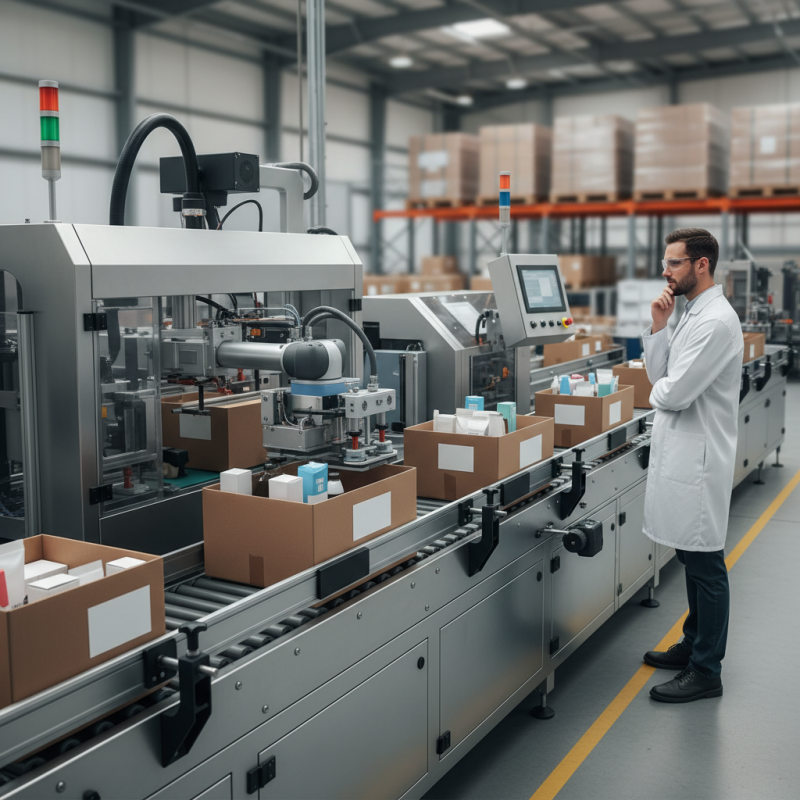
When selecting a case packing machine, understanding your production needs is crucial. Start by assessing your capacity requirements. How many units do you produce daily? A machine should match your output without causing bottlenecks. For businesses with fluctuating demands, consider flexible options that adapt to varying production volumes. A mismatch in capacity can lead to increased labor costs or wasted materials.
Speed is another vital factor. Evaluate how quickly you need the machine to operate. A faster machine can streamline your process, but it comes with risks. High speed may affect accuracy and product integrity. Striking a balance between speed and precision is essential. Sometimes, slower machines yield fewer errors, saving time on rework.
Finally, don't overlook the future. Trends change, and your production needs may evolve. Investing in a machine that meets current needs but allows for growth can be wise. Think about how often your output changes. Is your equipment equipped to handle those shifts? If you ignore these aspects, you may face unnecessary challenges down the road.
How to Choose the Right Case Packing Machine for Your Business?
Evaluating Different Types of Case Packing Machines for Specific Products
Choosing the right case packing machine is crucial for efficiency. Different products require unique packing approaches. For example, fragile items like glass bottles need softer handling. A machine that adjusts to various speeds is beneficial here.
Consider the dimensions of the products. Larger items often need more space and specific layouts. On the other hand, smaller products can be handled in compact setups. Machines with adjustable settings help cater to both situations. Not all machines fit every kind of product, so it's essential to analyze your specific needs.
Sometimes, businesses overlook the operator aspect. Training staff to use the machines effectively can greatly impact productivity. An uncomfortable interface or complex functions may slow down operations. Regular assessments are needed to ensure the machine continues to meet evolving demands.
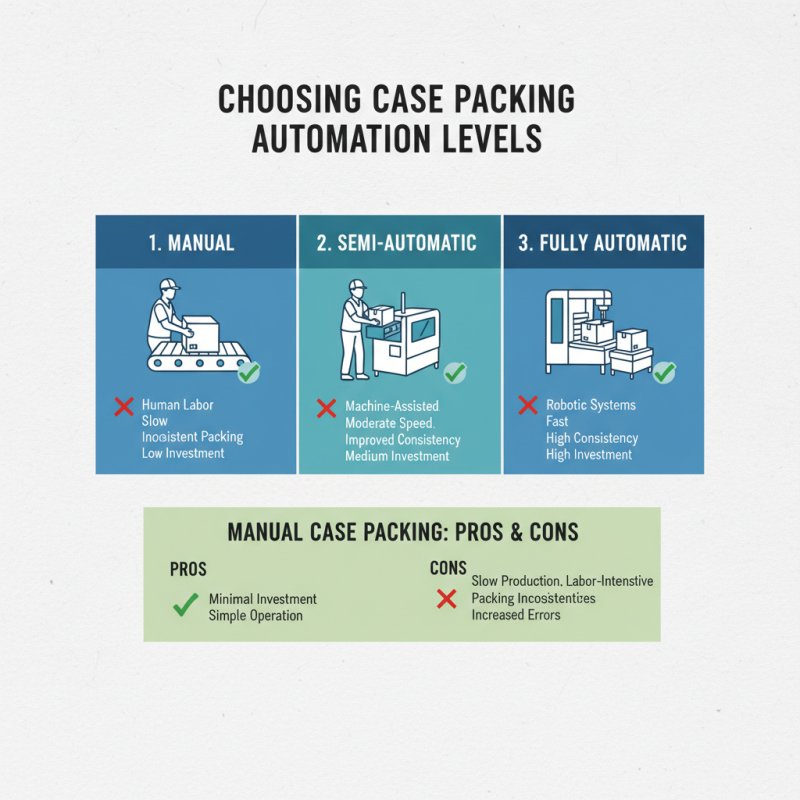
Assessing Automation Levels: Manual vs. Semi-Automatic vs. Fully Automatic
Choosing the right case packing machine can feel overwhelming. There are different automation levels to consider. Manual machines require human labor for packing. An operator places each item into the cases. This method can be slow. It often leads to inconsistencies in packing. However, it requires minimal investment.
Semi-automatic machines offer a middle ground. They still need human intervention, but the process is quicker. An operator loads items, but the machine seals the cases. This option improves efficiency and reduces labor costs. It's great for businesses with moderate volumes. Yet, it still may not keep up with high demand.
Fully automatic machines are the most efficient. They handle every aspect of packing. Items are loaded, packed, and sealed automatically. This option drastically cuts down on labor. However, the initial investment can be significant. Some businesses might find it hard to justify the cost. Automation can lead to technical issues that require troubleshooting. Balancing efficiency and investment is key to making the best choice.
Key Features to Consider: Scalability, Maintenance, and Versatility
When selecting a case packing machine, scalability is crucial. Your business may grow or change in demand. A flexible machine allows you to adjust production rates easily. This can save costs and prevent overproduction. You want a machine that can handle fluctuations without needing a complete overhaul. Consider machines that can accommodate various box sizes and types. This adaptability can extend your operational life.
Maintenance is another key feature. Machines need regular checks to avoid breakdowns. A well-designed packing machine should have accessible parts for easy maintenance. Look for models that come with clear manuals and troubleshooting guides. Limited downtime means increased efficiency, which is vital for competitive markets. Make sure you understand the maintenance costs and time involved.
Versatility also matters. A machine that can pack different products will benefit your business. Think about the types of items you handle. A machine that can switch between products without extensive reconfiguration can be a game-changer. Evaluate whether it’s intuitive to change settings for various items. Remember, if a machine is hard to adjust, it can lead to errors. Reflect on how often you will switch items. This will guide your choice effectively.
How to Choose the Right Case Packing Machine for Your Business? - Key Features to Consider
| Feature | Description | Importance Level |
|---|---|---|
| Scalability | Ability to handle increasing production demands. | High |
| Maintenance | Ease of upkeep and availability of service support. | Medium |
| Versatility | Capability to package various product types and sizes. | High |
| Speed | Number of packages processed per minute. | High |
| Integration | Compatibility with existing production lines. | Medium |
| Cost Efficiency | Overall costs, including purchase and operating expenses. | High |
Budgeting for Your Case Packing Machine: Cost-Effectiveness and ROI Analysis
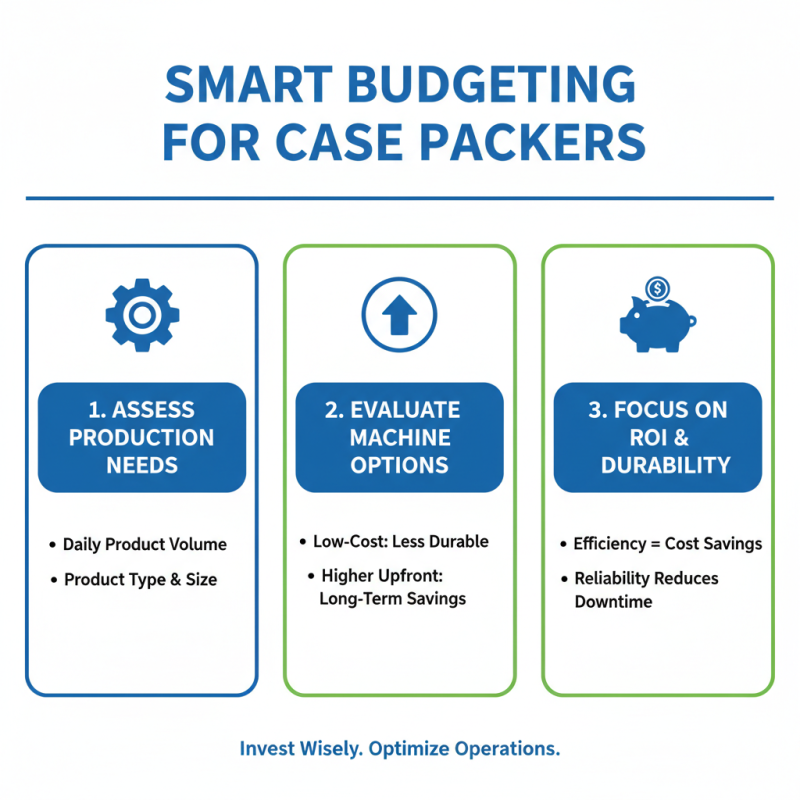
When budgeting for a case packing machine, considering cost-effectiveness is crucial. You should start by evaluating your production needs. Identify the volume of products you pack daily. This helps in selecting a machine that efficiently meets your requirements. There are low-cost options, but they may lack durability. Sometimes, spending a little more upfront can save money in the long run.
Assessing return on investment (ROI) is essential. Calculate potential savings on labor and packing time. A more efficient machine reduces manual errors and increases throughput. However, be cautious. If a machine is too advanced for your current volume, you might end up with wasted investment.
Think about the total cost of ownership. Maintenance, repairs, and energy consumption are key factors. Sometimes, a cheaper machine might lead to higher ongoing costs. Analyze all these aspects carefully. Set realistic expectations. Not every machine will suit every business.
Related Posts
-
Understanding the Benefits of Using a Wrapping Machine in Modern Packaging Solutions
-

How to Optimize Your Production Line with Stick Pack Filling Machines
-

2025 How to Choose the Best Stick Pack Filling Machine for Your Business
-
Essential Tips for Choosing the Right Pouch Filling Machine?
-
Unlocking Quality: Your Guide to Sourcing the Best Horizontal Packaging Machine Suppliers
-

Ultimate Guide to Choosing the Best Filling Machine for Your Business Needs