
How to Choose Food Stabilizers for Bulk Buying in 2026?
Bulk buying food stabilizers in 2026 is not just a price decision. A lower price per kilogram can be costly if the ingredient performs poorly in your recipe or arrives inconsistently. Start by identifying the job it must do: control separation, improve texture, or help a product remain stable during storage. Stabiliser Food options vary in function, processing needs, and compatibility with other ingredients. Small details matter. A powder that blends smoothly in a test batch may form lumps in a larger mixing tank.
Compare technical specifications, recommended use levels, allergen information, and batch documentation before requesting a bulk quote. Ask suppliers how they manage lot consistency, packaging, shelf life, and delivery schedules. Then test samples in your own formulation and production conditions. Record mixing time, texture, appearance, and performance after storage. Real results beat assumptions.
Price still matters. So does dependable supply. Calculate the cost at the dosage that works, not only the cost per kilogram. Check whether minimum order quantities fit your storage space and expected production. A large order can tie up cash or leave you with material you cannot use in time. Some trade-offs remain. A supplier’s sample may not reflect every production batch, and a neat spreadsheet cannot predict every processing issue. Keep a little room for retesting. Careful checks make bulk purchasing more informed, though no checklist removes every uncertainty.
Understanding the Role of Food Stabilizers
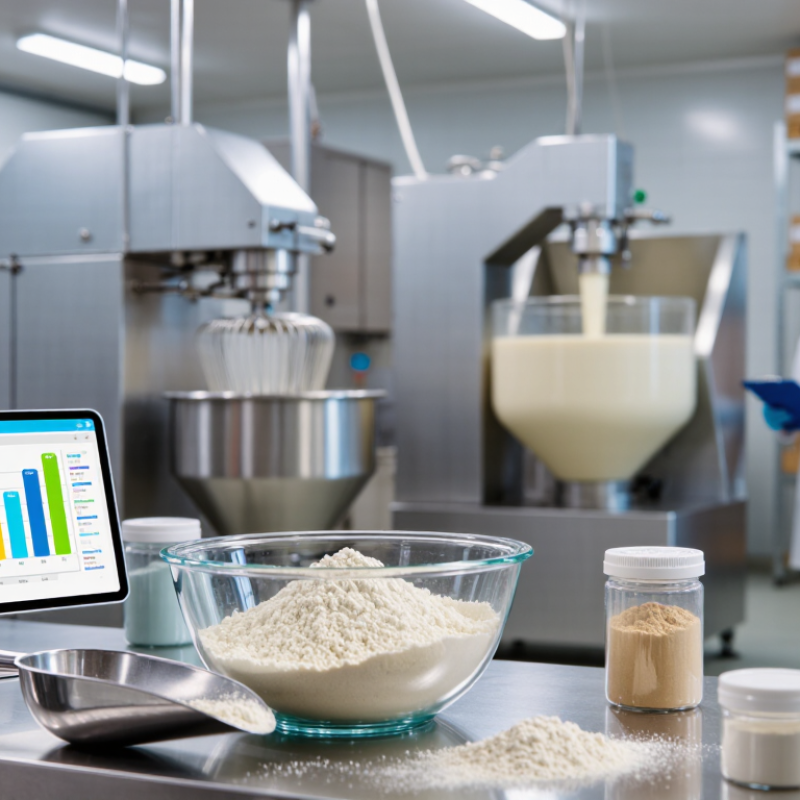
Food stabilizers help foods keep a predictable texture during processing, storage, and serving. Depending on the formulation, they can thicken a sauce, reduce water separation, or help oil and water stay mixed. They do not improve every product in the same way. The right choice depends on the food’s acidity, heating conditions, and intended shelf life.
Picture a chilled dressing sitting on a warehouse pallet. If its ingredients separate, customers may see a watery layer before opening it. A stabilizer can help maintain a more even appearance and mouthfeel. That matters. In frozen desserts, stabilizers may limit ice-crystal growth; in bakery fillings, they can help control moisture. Small changes in mixing time or temperature can still affect results, so supplier descriptions alone are not enough.
For bulk buying in 2026, connect the ingredient’s function to a real production test. Compare samples in your own recipe, then check texture after storage and under expected temperature changes. Ask for specifications, batch consistency information, and clear handling guidance. A larger order can reduce purchasing costs, but it can also tie up space and cash if the ingredient performs poorly. I would be cautious about choosing by price alone; that is an easy mistake to make when a spreadsheet looks convincing.
Defining Product, Processing, and Performance Requirements
Before buying stabilizers by the pallet, define the food and the job each ingredient must perform. A yogurt, sauce, and frozen dessert face different challenges. Record the product’s pH, water content, target texture, processing temperature, and storage conditions. Note whether the mix undergoes high shear, repeated heating, or freeze-thaw cycles. Small details matter.
The FAO’s The State of Food and Agriculture 2023 estimated that 13.2% of food was lost between harvest and retail in 2021.
UNEP’s Food Waste Index Report 2024 estimated 1.05 billion tonnes of food waste in 2022.
These figures do not mean stabilizers can prevent losses. They do show why shelf-life and handling targets need clear definitions. A stabilizer cannot replace temperature control.
Set measurable performance limits before comparing bulk offers. Specify acceptable viscosity, separation, mouthfeel, and stability after the real production process. Test samples in the finished recipe, not just in a supplier’s demonstration mix. Keep batch records. Check certificates of analysis, allergen statements, and lot-to-lot consistency. Confirm storage life and packaging size suit your warehouse. A cheaper ingredient may need a higher dose or alter flavor. I have seen a tidy bench test miss production-scale mixing effects. Leave room for that uncertainty.
Comparing Stabilizer Types and Ingredient Compatibility
How to Choose Food Stabilizers for Bulk Buying in 2026?
Comparing Stabilizer Types and Ingredient Compatibility
Bulk stabilizer buying works best when the ingredient fits the product, not just the price. Xanthan gum builds viscosity in sauces and dressings, even across a broad range of acidity. Guar gum hydrates in cold mixtures and can add body to fillings. Modified starches suit soups and frozen meals, but their performance depends on the specific grade and heating process. Small differences matter.
For dairy applications, some carrageenan types interact with milk proteins and help limit separation. Pectin may suit fruit preparations, though its setting behavior depends on acidity, sugar, and calcium. Check technical data sheets for recommended use levels and processing conditions. Then test the stabilizer with the actual salt, protein, and acid levels in your recipe. A smooth bench sample can still behave differently after cooling or transport. I would not assume a successful test guarantees a perfect production run; that assumption deserves a second look.
Tips: Compare cost per finished batch, not cost per kilogram. Before committing to a large order, test a small lot and record mixing time, texture, and storage results. Ask about shelf life and lot consistency, too. Keep notes. They prevent repeat guesswork.
How to Choose Food Stabilizers for Bulk Buying in 2026? – Comparing Stabilizer Types and Ingredient Compatibility
Use this comparison as a formulation and procurement starting point. Performance depends on grade, dosage, processing conditions, and the complete recipe; confirm suitability through supplier specifications and production trials.
| Stabilizer type | Main functions | Ingredient compatibility | Typical product fit | Processing considerations | Bulk-buying checks |
|---|---|---|---|---|---|
| Xanthan gum | Thickens and suspends particles; shear-thinning texture can help a product flow when stirred or poured. | Generally works across a broad pH range and in the presence of salts. Often paired with guar or locust bean gum to modify texture. | Sauces, dressings, beverages, gluten-free baking, and some frozen products. | Disperse carefully to limit lumping. High-shear mixing can aid dispersion; hydration and final viscosity depend on the grade and process. | Compare viscosity grade, particle size, microbiological specifications, allergen statements, and moisture-barrier packaging. |
| Guar gum | Provides thickening and water binding; can build viscosity without heating in many formulations. | Often synergistic with xanthan. Performance can be affected by pH, salts, sugars, and the order of ingredient addition. | Sauces, soups, dairy-style products, bakery fillings, and selected frozen foods. | Can hydrate rapidly and form lumps if added directly to water without adequate dispersion. Prolonged heating under acidic conditions may reduce viscosity. | Check viscosity and particle-size specifications, food-safety documentation, and storage guidance; protect opened bags from humidity. |
| Locust bean gum (LBG) | Thickens and improves body; can contribute to gel structure in combination with other hydrocolloids. | Known for synergistic interactions with xanthan and certain carrageenan systems. Its behavior depends on the co-ingredient and process. | Ice cream and other frozen desserts, dairy products, and selected gelled foods. | Usually requires heating for effective hydration; verify the time and temperature requirements for the selected grade. | Check mesh size, hydration requirements, color, and consistency between lots. Consider supplier lead time and price variability. |
| Carrageenan | Thickens, stabilizes, or gels depending on carrageenan type and the formulation. | Useful in many dairy systems through interactions with milk proteins. Potassium can promote firmer kappa-carrageenan gels; calcium can support some iota-carrageenan gels. | Chocolate milk, dairy desserts, processed foods, and selected plant-based products. | Type, ions, heat treatment, and cooling conditions affect results. Test the finished recipe, particularly when changing protein source or mineral balance. | Specify the carrageenan type and functional grade; verify regulatory status for the intended market and obtain product-specific documentation. |
| Pectin | Forms gels and adds viscosity; performance differs between high-methoxyl and low-methoxyl pectin. | High-methoxyl pectin typically gels with sufficient soluble solids and acidity. Low-methoxyl pectin gels in the presence of calcium, with requirements depending on grade. | Fruit spreads, jellies, confectionery, acidic dairy products, and fruit preparations. | Control pH, soluble solids, calcium availability, and addition sequence according to the pectin type and target texture. | Confirm pectin type, setting speed, strength, and application guidance. Small trials can reduce the risk of excess inventory in a narrow-use grade. |
| Carboxymethyl cellulose (CMC) | Thickens, binds water, and helps control texture or separation in suitable formulations. | Used in beverages, bakery, and frozen products. In protein beverages, compatibility depends on pH, protein type, ionic strength, and process conditions. | Beverages, bakery products, ice cream, and certain sauces. | Hydration and viscosity vary with substitution level, grade, and formulation. Validate stability in the finished product, not just in water. | Compare viscosity grade and substitution specifications; check regulatory and labeling requirements for the destination market. |
| Food starch (native or modified) | Provides thickening, body, or structure. Modified starches are designed for particular processing or stability needs. | Can suit sauces, soups, fillings, and dairy or plant-based products; performance depends on starch source and modification type. | Ready meals, canned foods, sauces, bakery fillings, and desserts. | Cooking, shear, acidity, and freeze-thaw cycles affect texture differently across grades. Select a grade against the actual processing and storage profile. | Check botanical source, modification type, labeling rules, and performance after the intended heat and storage cycle. |
Practical Bulk-Purchasing Checklist
- Match the stabilizer to the product’s pH, protein source, mineral content, sugar level, processing conditions, and storage life.
- Request a current specification sheet, certificate of analysis, allergen information, food-safety documentation, and destination-market regulatory information.
- Compare lot-to-lot consistency, minimum order quantity, lead time, packaging size, shelf life, and storage requirements—not price per kilogram alone.
- Run pilot trials using the intended mixing, heating, cooling, and storage conditions before committing to a large purchase.
- Store materials sealed, dry, and under the conditions stated in the product specification; use stock rotation to manage inventory.
Checking Supplier Quality and 2026 Regulatory Requirements
When choosing food stabilizers for bulk buying in 2026, check the supplier’s quality system before comparing price per kilogram. Ask for a current specification sheet, allergen statement, and certificate of analysis for each lot. Compare key details, such as viscosity, moisture, particle size, and storage conditions. A small sample can reveal clumping or a texture change that paperwork may not show. Paperwork matters. So does the material in your mixing bowl. Request traceability records and ask how the supplier handles rejected lots, production changes, and delivery delays. I would treat a polished document pack as a starting point, not proof of consistent performance.
Regulatory requirements depend on where the stabilizer will be sold, the food category, and its intended use. In 2026, verify permitted uses, purity criteria, labeling obligations, and any applicable limits using current guidance from the relevant food authority. Ask the supplier to identify the exact material and provide written compliance information for your market. Avoid relying on an old declaration copied from another product or region. Rules and product formulations can change. Keep dated records of checks, specifications, and lot numbers, and confirm them again before repeat orders. I would not assume that a familiar ingredient name settles every question; details can be easy to miss.
Planning Bulk Quantities, Costs, Storage, and Shelf Life
For 2026 bulk purchases, estimate annual use from actual production records, then add only enough safety stock to cover supplier lead times and demand swings. Calculate landed cost per usable kilogram, including freight, handling, and expected waste—not just the quoted price. FAO’s Food Price Index averaged 122.0 points in 2024, 2.1% below 2023. That broad commodity measure is not a stabilizer price forecast, but it shows why budgets need room for movement. Small batches matter. Compare quotes for the same grade, function, and specification; otherwise, apparent savings may vanish in production.
Storage can decide whether a bulk deal is genuinely economical. Check each supplier’s technical data sheet and certificate of analysis for recommended temperature, humidity, packaging, and shelf life; requirements differ among gums, starches, and other stabilizers. Keep bags sealed, off the floor, and away from wash areas or steam. Label opened packs with the opening date and lot number. Dates matter, too. Use a first-expiring, first-out system, and inspect for clumping, damaged liners, or changes in flow before use. I would still test an older lot in a small production run. It adds work, but a paper shelf-life date alone cannot confirm performance in your process.
How to Choose Food Stabilizers for Bulk Buying in 2026
Typical unopened shelf-life planning ranges for dry stabilizers
These broad planning estimates assume sealed packaging stored in a cool, dry place; actual shelf life varies by product and packaging. Check the supplier’s date and storage instructions, and buy bulk quantities you can use before the stated best-by date.