
BLOG

China Top 10 Round Airless Bottle Manufacturers

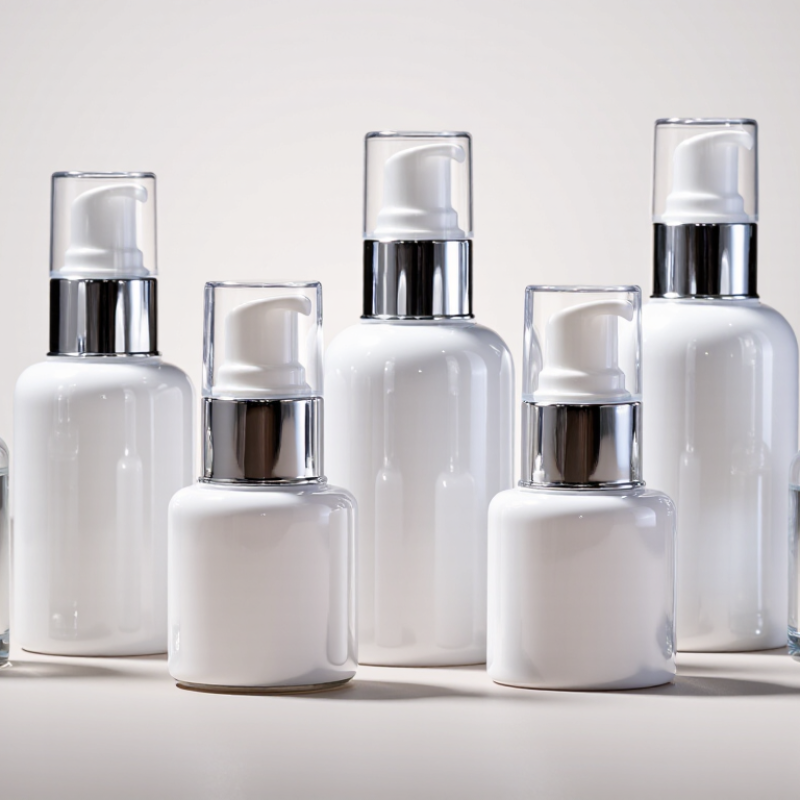
Round Airless Bottle packaging has become a practical choice for skincare brands seeking controlled dispensing and a cleaner user experience. Its pump-and-piston design helps limit product exposure to air, while the rounded shape fits comfortably in the hand and stands neatly on a retail shelf. These details matter. So does consistent output: a pump that dispenses unevenly can frustrate customers and leave usable cream behind.

Market reports provide useful context, but they do not certify individual suppliers. Grand View Research’s Airless Packaging Market analysis tracks demand across packaging types and applications, including cosmetics and personal care. Smithers’ The Future of Global Packaging to 2028 examines wider shifts in packaging materials, formats, and supply chains. Together, these reports point to the importance of product protection, usability, and manufacturing capability. Their market categories differ, however, so forecasts should not be treated as directly comparable or as proof of a specific factory’s performance.

This China Top 10 Round Airless Bottle Manufacturers overview is designed to help buyers begin supplier research with clearer questions. Compare bottle capacity, resin options, pump output, decoration methods, and sample quality. Ask how factories check leakage, component fit, and production consistency. A polished catalogue is not enough. Request current specifications and test samples with the formula you plan to package. Supplier claims can sound precise, yet some details remain hard to verify from public information alone. That is worth remembering. The right manufacturer depends on your product, order volume, target cost, and quality requirements—not rankings alone.
China Top 10 Round Airless Bottle Manufacturers

What Defines a Round Airless Bottle and How Does It Work?

China Top 10 Round Airless Bottle Manufacturers

What Defines a Round Airless Bottle and How Does It Work?

A round airless bottle has a circular outer profile and a pump system designed to dispense product without a conventional dip tube. The shape fits comfortably in the hand and stands neatly on a counter. Inside, a movable platform sits beneath the formula. No dip tube. When the pump is pressed, pressure moves the platform upward and pushes product through the dispenser. The bottle’s round shape is mainly a design choice; the airless action comes from its internal components.

This structure can limit repeated contact with air, which may help protect sensitive formulas during everyday use. It does not make the contents sterile or prevent every possible change. Performance depends on the formula’s thickness, the pump design, and a well-matched seal. In practical testing, watch for smooth dispensing, leaks, and how much product remains near the end. The final pumps can be less predictable. That detail is easy to overlook.

Tips: Prime the pump with several presses after filling, then test it upright and at different temperatures. Check that the formula flows consistently before choosing a bottle size. A sample test is useful, though it cannot perfectly reproduce months of real use.

China’s Round Airless Bottle Manufacturing Landscape

China’s round airless bottle manufacturing landscape combines injection molding, component sourcing, decoration, and final assembly. Many suppliers can adjust bottle capacity, wall thickness, pump style, and surface finish for different product needs. A round profile also suits automated filling lines and fits neatly into cartons. Yet small changes in neck dimensions can affect pump fit and sealing.

Production quality depends on more than a polished sample. Buyers can ask how factories check piston movement, dose consistency, leakage, and cap alignment. A simple test may involve operating filled samples repeatedly and storing them on their sides. Look closely at the bottle base, too; uneven molding can interfere with piston travel. Details matter.

The landscape is not perfectly uniform. Some manufacturers handle molding and assembly in-house, while others rely on outside component suppliers. That can make lead times and inspection practices harder to compare. A detailed specification sheet helps: include capacity, material, pump output, color tolerance, and testing requirements. Even then, early samples may need revision. A practical review should compare production samples, not just catalog images.

Key Criteria for Evaluating Chinese Airless Bottle Manufacturers

Choosing a Chinese round airless bottle manufacturer requires more than judging a glossy sample. Check the pump’s dose consistency, priming behavior, leakage resistance, and leftover product after dispensing. Request test methods, batch inspection records, material specifications, and the scope of any ISO 9001 or ISO 22716 certification. A polished sample can still hide uneven spring resistance or a cap that loosens during transit. Ask for production-line samples, not just showroom pieces.

Tips: Send the supplier your formula, fill volume, and target dose early. Test filled bottles through repeated pumping and shipping simulation. Confirm that decoration, color, and recycled-content claims are documented.

Material transparency matters. The OECD’s Global Plastics Outlook reports that packaging accounted for 40% of plastic waste in 2019. That figure is not specific to airless bottles, but it makes material use and recyclability worth checking. Ask whether the bottle, pump, and dip-tube materials can be separated, and request evidence for any recycled-content claim. Compare quotations using the same specifications; otherwise, a lower price may simply reflect thinner walls, different pump components, or less testing. Supplier answers can be incomplete. Record open questions before approving tooling.

China Top 10 Round Airless Bottle Manufacturers - Key Criteria for Evaluating Chinese Airless Bottle Manufacturers

Use this evidence-based checklist to compare up to ten suppliers. It lists evaluation criteria rather than ranking or making unverified claims about specific manufacturers.

No. Evaluation criterion What to verify Suggested evidence or test Comparison method
1 Product and design capability Available round-bottle shapes, capacities, neck finishes, pump styles, and customization options. Technical drawings, component specifications, samples, and confirmation of which parts require new tooling. Compare samples and drawings against the same product brief.
2 Dispensing performance Dose consistency, priming behavior, pump return, and performance with the intended product viscosity. Written test method and results from repeated dispensing trials using the customer’s formula or a representative test material. Set product-specific acceptance limits before testing; compare results under identical conditions.
3 Evacuation and residual product How much product remains inaccessible at the end of dispensing and whether the follower mechanism moves reliably. A documented evacuation test using a defined fill quantity, formula, storage condition, and endpoint. Compare measured residual amounts using the same test protocol.
4 Leakage and closure integrity Leakage at the pump, neck, joints, or base during storage and handling. A written leak-test procedure identifying sample size, orientation, duration, and pass/fail criteria. Run the same agreed protocol on samples from each supplier.
5 Formula compatibility Compatibility of product-contact materials with the formula, including potential swelling, cracking, discoloration, odor, or functional change. Material declarations and a customer-led compatibility study using the actual formula and defined storage conditions. Assess appearance and function against agreed criteria at each study interval.
6 Materials and documentation Resin and component specifications, product-contact declarations, and traceability information relevant to the intended market and use. Current technical data sheets, material declarations, and batch or lot identification records. Check regulatory suitability for the target market. Confirm documents match the quoted design and actual supplied materials.
7 Quality management and inspection Incoming, in-process, and final inspection controls; defect classification; corrective-action handling; and lot traceability. Quality manual or process overview, sample inspection records, and applicable certificates verified with their issuer. ISO 2859-1 provides sampling schemes for inspection by attributes; sampling plans should be agreed for each order. Review the inspection plan and records; do not treat certification alone as proof of product performance.
8 Decoration and workmanship Print or coating appearance, color consistency, adhesion, scuff resistance, and alignment on the curved bottle surface. Production-like decorated samples, approved color references, and agreed appearance and durability checks. Approve a signed reference sample and define acceptable visual variation in writing.
9 Production capacity and delivery Quoted production lead time, order minimum, available capacity, tooling schedule, and ability to meet the requested delivery plan. A dated quotation, production schedule, capacity assumptions, and written confirmation of order-specific terms. Compare like-for-like quotations and schedules; these terms vary by design, order size, and season.
10 Packaging and transport readiness Protection against scratches, deformation, contamination, and transit damage; suitability of packing configuration for the shipment route. Packing specification, carton or pallet details, and a shipment test plan appropriate to the distribution system. ASTM D4169 provides guidance for evaluating shipping containers and systems. Review packaging samples and assess transit performance using a route-appropriate test plan.

Note: ISO 15378 is a GMP-based quality management standard for primary packaging materials for medicinal products; it may be relevant to pharmaceutical packaging projects but is not a universal requirement for every cosmetic airless bottle. Confirm all standards, certificates, and regulatory requirements for the product and destination market.

Profiles of 10 Leading Round Airless Bottle Manufacturers in China

China’s round airless bottle manufacturers vary in tooling, materials, decoration, and production focus. Profiles of ten leading suppliers are most useful when they show what each factory can actually deliver, not just its catalogue range. A round bottle may look simple. Its pump, piston, and seals must work together to dispense product consistently.

Compare manufacturers by practical strengths. Some offer in-house mold development and can adjust bottle dimensions or shoulder shapes. Others focus on stable dosing, smooth pump action, or compact travel sizes. Several may provide different capacities, closure styles, and surface finishes. Ask for sample details, including fill volume, output per stroke, bottle material, and component tolerances. Small differences matter.

A capable supplier should explain its sampling process, quality checks, production lead times, and minimum order quantities clearly. Request samples from the same specification you plan to order, then test them with your intended formula. Check for leakage, residue, uneven dispensing, and parts that loosen during handling. A polished sample is not enough. I would also verify that quoted specifications appear in the final order documents; this step is easy to overlook. Compare communication and follow-up, too. The lowest price may not mean the lowest overall cost.

Round Airless Bottles: Common Nominal Capacities

These representative nominal sizes are commonly offered for airless packaging. Availability and bottle dimensions vary by supplier; the chart does not compare manufacturers, sales, or production volumes.

How to Compare Suppliers and Choose the Right Manufacturer

A supplier ranking is only a starting point. Grand View Research estimated the global cosmetics packaging market at USD 34.8 billion in 2023, with a projected 5.4% compound annual growth rate from 2024 to 2030. This broad market estimate signals demand, but it does not prove that any supplier can deliver a reliable round airless bottle. Compare technical evidence, not catalogue photos. Ask for drawings, material specifications, pump-output tolerances, minimum order quantities, and documented quality checks. A glossy sample can mislead.

Test the bottle with your own formula. Check priming, dose consistency, leakage after transport simulation, and whether the pump works near the end of the fill. Request samples from more than one production batch; one flawless unit proves little. Confirm that the bottle, pump, and formula have been compatibility-tested over time, including under warm and cool storage conditions. For round bottles, inspect wall thickness and shoulder alignment, since small variations can affect appearance and filling. Review lead times and defect-handling procedures in writing. I would also ask suppliers to explain test methods clearly; vague assurances are not evidence. A few details may still be missed. That is exactly why pilot production matters.

Get in touch

Our goal is to provide you with excellent customer service while meeting all of your packaging automation needs. We provide the peace of mind that comes from working with one manufacturer, one service department and one point of contact.