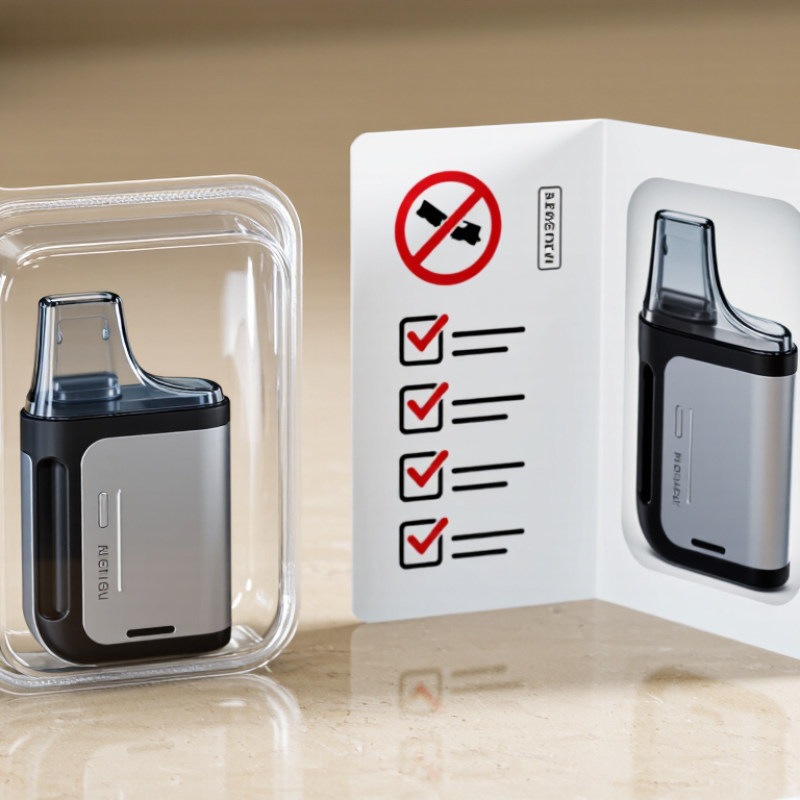
How to Check Disposable Vape Pod Safety and Compliance
A Disposable Vape Pod should be checked as a regulated consumer product, not judged by appearance alone. Safety begins with clear packaging, intact seals, and readable manufacturer details. Look for a batch or lot number, ingredient information, and instructions that match the product. Small details matter. If labels are missing, blurred, or inconsistent, pause before accepting the item.
Check whether the manufacturer provides verifiable product documentation and applicable conformity information for the market where the product is sold. Requirements differ by location, so a logo or broad compliance claim is not proof by itself. Packaging can look convincing; that alone proves little. Compare product identifiers with the manufacturer’s official information, and treat unexplained mismatches as a warning. Do not use a pod with leaks, cracks, unusual residue, or signs of tampering. Keep it away from children and pets, and follow local disposal guidance for electronic products and batteries.
A sound review also considers the limits of inspection. A visual check cannot confirm every material or manufacturing control, and online claims may be incomplete. Pause when uncertain. Seek clarification from the manufacturer or a qualified local authority, rather than relying on guesswork. The goal is not to make a product seem risk-free; it is to recognize credible information, spot obvious concerns, and make a more informed safety and compliance assessment.
Identify the Pod’s Design, Components, and Intended Use
A disposable vape pod should be assessed by its design and stated purpose, not just its appearance. Check whether it is a sealed, single-use unit or a pod intended for a specific compatible device. The instructions and package should describe that use clearly. Do not force a pod into a device or assume similar shapes mean they are interchangeable. Look for readable product details, a batch or traceability code, and consistent information across the packaging and pod. Small print can be easy to miss.
Tips: Inspect the mouthpiece, pod shell, liquid reservoir, and electrical contacts under good light. Look for cracks, residue, leaks, loose parts, or damaged seals. If anything seems off, set it aside.
Identify the main components without opening the pod: the reservoir holds the liquid, the coil heats it, and contacts connect with the device.
A clean exterior is not proof of safe construction. That is easy to forget. Check that instructions explain storage, handling, and disposal, and that the product’s stated specifications are available from a reliable source. Avoid using a pod with unclear labeling or visible damage. I would not treat a neat package as enough evidence; documentation and careful inspection matter too.
Inspect Packaging, Labels, and Required Safety Information
Before opening a disposable vape pod, inspect the box under good light. Look for a sealed package, clear print, and no signs of moisture, crushing, or tampering. A polished design proves little. Check that the product name and pod details on the box match the item inside.
Read the label rather than relying on pictures. It should provide the information required where the product is sold, such as ingredient or nicotine details, relevant warnings, and safe-handling instructions. Check for a batch or lot code and identifiable manufacturer or distributor contact details. Text should be readable, not covered by stickers or blurred by poor printing. If key details are missing, inconsistent, or hard to verify, set the product aside and ask the seller for documentation.
Also inspect the pod itself. Look for cracks, residue, a loose mouthpiece, or liquid around the seals. Do not use a damaged or leaking unit. A small mismatch between box and pod can be easy to overlook, yet it matters. Keep the packaging until you have checked the information, and compare claims with reliable product-safety guidance in your area. No label can guarantee quality by itself.
Check Battery, Charging, and Electrical Protection Features
Check the pod’s battery area for cracks, dents, swelling, or unusual warmth. Do not use a device with a damaged casing or loose charging port. Check its label for battery details, input ratings, and clear charging instructions. Some disposable pods are not designed to be recharged. Never connect one to a charger unless its instructions explicitly allow it. A familiar-looking symbol is not proof of safety. Match any compliance information or test report to the exact model, and check whether an independent, qualified laboratory issued it.
Tips: Use only the specified cable and power source. Charge on a dry, hard surface, away from bedding and direct sunlight. Stay nearby while it charges. Stop if the pod becomes hot, smells unusual, or makes a hissing sound. Do not open the casing to inspect wiring; small components can still present electrical risks.
Protection features may include overcharge, short-circuit, and overcurrent safeguards. Look for these in the product documentation, not just in advertising. If instructions are missing or contradictory, treat that as a warning and ask the seller or manufacturer for written clarification. I might be tempted to trust a neat package, but packaging can look convincing. Clear documentation matters more. Dispose of a damaged or spent device through an appropriate battery or electronics collection point, where available.
| Check Area | What to Verify | Useful Evidence | Warning Signs | Relevant Reference |
|---|---|---|---|---|
| Battery identification | Confirm the battery chemistry, rated voltage, capacity, and model are documented and consistent across the product, packaging, and technical file. | Battery specification sheet, bill of materials, product label, and traceable test documentation. | Missing or inconsistent ratings; no way to identify the battery model or supplier. | Applicable product and battery-safety requirements depend on the market and device design. |
| Cell safety testing | Check whether the rechargeable lithium cell has been evaluated to the applicable cell-safety standard. Cell-level testing does not, by itself, establish that the complete vape device is safe. | Test report identifying the exact cell model, standard edition, laboratory, and test results. | A report for a different cell, an incomplete report, or a claim that cell testing proves whole-device compliance. | IEC 62133-2 covers safety requirements for portable sealed secondary lithium cells and batteries within its scope. |
| Device-level electrical safety | Verify that the complete electrical system has been assessed, including the battery, circuitry, charging interface, enclosure, and foreseeable operating conditions. | Device-level risk assessment and applicable test reports for the exact product configuration. | Only component certificates are provided, with no assessment of the assembled device. | UL 8139 addresses electrical systems of electronic cigarettes; confirm applicability and the relevant edition for the target market. |
| Overcharge and overvoltage protection | Check for documented protection against charging beyond the battery’s permitted limits, where required by the design. Confirm protective circuitry is present and tested. | Circuit diagram, protection-component specifications, and test results for the finished device. | No documented protection strategy or evidence that protection was tested with the production configuration. | Use the applicable device and battery standards; do not rely on an unverified marketing claim. |
| Over-discharge protection | Verify that the design prevents the battery from being discharged outside its specified operating limits during normal use and foreseeable faults. | Battery-management design details and functional test results. | Protection behavior is undocumented or the device continues operating after the battery reaches its specified cutoff condition. | Confirm limits against the exact battery manufacturer’s specifications and applicable safety requirements. |
| Short-circuit and overcurrent protection | Check that the design addresses short circuits and excessive current, including risks from a damaged device, conductive debris, or electrical faults. | Electrical protection schematic, fault-condition test records, and documented response of the protection circuit. | No evidence of fault testing, exposed conductors, or a device that continues to heat or operate during a fault. | Assessment should follow the applicable device-level safety standard and documented risk analysis. |
| Temperature protection | Verify that battery and device temperatures are controlled under normal use, charging, and relevant fault conditions. | Temperature-test results, sensor or cutoff details where used, and thermal-risk assessment. | Unexplained excessive heating, heat damage, or no documented thermal evaluation. | Test conditions and limits should be taken from the applicable standard and component specifications. |
| Charging input and compatibility | Confirm that the charging input, cable or connector, and stated power source are clearly specified and compatible with the device’s design. | Product instructions and label, charging-interface specifications, and charging test report. | Unclear input ratings, contradictory instructions, damaged or loose charging connections, or unsupported charging claims. | There is no single charging specification that applies to every disposable vape; check the product’s documented ratings and market rules. |
| Charging behavior | Check that charging stops or is limited as designed when the battery reaches its permitted charging condition, and that abnormal charging is addressed. | Functional and fault-condition charging tests for the finished device. | Charging behavior is not described or tested, or the device becomes abnormally hot during charging. | Follow the device manufacturer’s validated instructions; do not assume that every USB power source is suitable. |
| Enclosure and insulation | Inspect whether the battery and electrical connections are protected from accidental contact, liquid ingress, and mechanical damage appropriate to the product design. | Construction review, insulation and mechanical test records, and production inspection criteria. | Cracked casing, exposed wiring, loose components, corrosion, or evidence of liquid reaching electrical parts. | Apply relevant device-level requirements and the product’s documented ingress and mechanical-risk assessment. |
| Transport documentation | For products containing lithium batteries, verify that required transport classification and test documentation are available for the battery configuration shipped. | UN 38.3 test summary and shipping documentation, where applicable. | Missing or mismatched transport documents, or a claim that transport testing alone proves product-use safety. | UN Manual of Tests and Criteria, subsection 38.3, concerns transport testing of lithium cells and batteries; it is not a substitute for device safety assessment. |
| Labeling and instructions | Check that electrical ratings, charging directions, relevant warnings, and disposal information are legible and consistent with the technical documentation. | Final artwork, user instructions, and a market-specific labeling review. | Missing or contradictory instructions, unreadable warnings, or directions that conflict with tested charging conditions. | Labeling and warning rules vary by jurisdiction and product classification. |
| Production consistency and traceability | Confirm that production units use the same battery, protection components, and critical construction assessed in the test reports. | Supplier records, incoming inspection results, lot codes, change-control records, and production quality checks. | Uncontrolled component substitutions or no traceability from finished product to production lot. | Compliance evidence applies only to the configuration and scope documented; material changes may require reassessment. |

Important: Requirements differ by country and product configuration. This checklist is for screening documentation and visible condition; it is not a certification, legal determination, or substitute for testing by a qualified laboratory.
Assess E-Liquid Integrity, Materials, and Leak Resistance
Treat a disposable pod as a sealed fluid path, not just a plastic shell. Check that the reservoir, seals, and mouthpiece show no cracks, residue, or loose joins. Check every seam. Look for a traceable batch identifier and clear ingredient information. A supplier’s test records should identify the e-liquid tested and show how the pod was checked for leakage after storage, temperature changes, and handling. Ask whether materials contacting the liquid were assessed for compatibility with its solvents and flavor ingredients. A clean-looking pod is not proof of chemical integrity.
Material choice matters. The U.S. National Academies’ 2018 report reviewed evidence that e-cigarette aerosols can contain metals, including nickel, tin, and lead; device design can affect emissions. That is not a direct test of pod materials, but it supports asking for documented material and emissions assessments. A 2024 Pediatrics analysis of U.S. poison-center data recorded 7,043 e-cigarette exposure cases among children younger than five in 2022. Those records do not show that leaking pods caused each exposure. Still, they make secure seals and child-resistant storage important checks. Looks can mislead. I would treat missing test records as unresolved—not as evidence that a pod passed.
How to Check Disposable Vape Pod Safety and Compliance
EU Tobacco Products Directive (2014/40/EU) limits for nicotine-containing e-cigarette products
The EU TPD sets a maximum of 10 mL for refill containers and 2 mL for cartridges or tanks containing nicotine e-liquid. It also limits nicotine concentration to 20 mg/mL. Check the rules for the market where the product is sold. These capacity limits do not establish material safety or leak resistance: review material and ingredient documentation, and verify leakage through appropriate product testing.
Verify Testing Records and Applicable Regulatory Compliance
Before accepting a disposable vape pod, match each test report to the exact model, battery, and production batch. Look for dated results, named test methods, sample descriptions, and clear pass-or-fail findings. A certificate alone is not proof that every production batch matches the tested sample. Small gaps matter. Confirm the laboratory’s accreditation covers the tests performed, such as electrical safety, leakage, and aerosol analysis. Ask the lab to verify report numbers independently; paperwork can lag behind product changes.
Battery records deserve close attention. The U.S. Fire Administration’s 2017 report reviewed 195 e-cigarette fire and explosion incidents from 2009 through 2016, with 133 acute injuries reported. These figures cover e-cigarettes broadly, not disposable pods alone, but they make battery protection testing worth checking. Review evidence for short-circuit, overheating, and charging safeguards, where applicable. I would not treat a single passing sample as a complete safety picture.
Then check compliance for the intended sales market, since requirements differ by jurisdiction. Verify applicable product notifications or authorizations, labeling rules, ingredient disclosures, and age-related sales controls through the relevant regulator’s current guidance. Keep the compliance documents linked to the product version and batch. If a report lists a different device configuration, or lacks traceable sample details, pause and request clarification before relying on it.