
Where to Buy Thick Paper Tubes from China?
Finding reliable Thick Paper Tubes from China requires more than comparing online prices. Buyers must match tube strength, wall thickness, inner diameter, length, and surface finish with the product’s real packaging needs. A tube for posters may need different compression resistance than one for textiles, labels, or industrial materials. Small details matter.
A practical sourcing process begins with verified manufacturers and clear technical drawings. Ask for material grades, kraft paper layers, adhesive information, moisture resistance, and production tolerances. Request samples before placing a large order. Hold one sample in your hand. Check whether the edges are clean, the tube stays round, and the cap fits securely. Photos can hide uneven winding or weak seams.
Supplier verification also deserves attention. Review factory experience, export records, quality procedures, and available certifications. A video factory tour can help, but it is not complete proof. Independent inspection may be worthwhile before shipment. Confirm packaging, loading methods, lead times, payment terms, and shipping responsibilities in writing. Clear communication prevents expensive misunderstandings.
Do not choose by price alone. Very low quotes may exclude tooling, custom printing, protective packaging, or inland transport. My first shortlist would probably be too broad without a written specification. That is an easy mistake. Compare suppliers using the same requirements and sample standards. A dependable Chinese manufacturer should explain limitations honestly, suggest practical improvements, and provide consistent production evidence. With careful testing and realistic expectations, buyers can source Thick Paper Tubes that protect products, control costs, and support reliable long-term supply. Errors still happen. Good preparation reduces their impact.
Types of Thick Paper Tubes Available from Chinese Suppliers
Where to Buy Thick Paper Tubes from China?
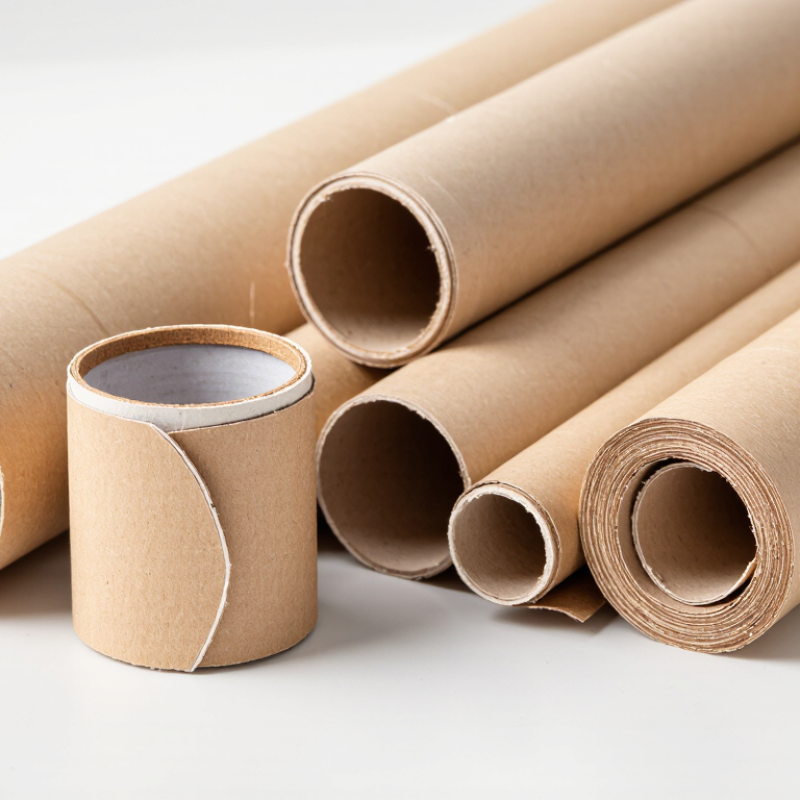
Chinese suppliers offer several thick paper tube types for different packaging and industrial needs. Spiral-wound tubes use layered kraft paper, creating strong walls for posters, textiles, and shipping containers. Convolute-wound tubes have smoother interiors and better dimensional stability. They suit labels, films, and precision winding applications. Some suppliers also produce rigid composite tubes with plastic or aluminum liners for added moisture resistance.
Tube thickness is not the only specification that matters. Ask about inner diameter, wall thickness, length tolerance, paper grade, and compression strength. For heavy products, a dense kraft tube with reinforced edges may perform better. Mailing tubes often include fitted caps, while textile cores need smooth surfaces to prevent material damage. Custom printing and colored outer paper are also available.
I usually recommend comparing factories through verified sourcing platforms, trade exhibitions, or an independent purchasing agent. Request samples before placing a large order. Test them with actual product weight, stacking pressure, and warehouse humidity. A supplier may quote a low price, but weak end caps can increase damage rates. I have seen measurements vary slightly between batches, so written tolerances are essential. Some factories explain their testing clearly; others provide vague answers. That difference deserves attention.
Key Industries That Use Thick Paper Tubes
Where to Buy Thick Paper Tubes from China?
Thick paper tubes serve many industries with demanding winding, storage, and protection needs. Textile manufacturers use them for yarn, fabric, and nonwoven rolls. Printing companies need rigid cores for paper, film, labels, and flexible packaging materials. Cable producers also use heavy-duty tubes for controlled winding and safer handling.
Construction suppliers may select thicker tubes for forming concrete columns or protecting long components. Agricultural and food-processing facilities use them for certain dry-material rolls, provided the paper grade suits the environment. Industrial workshops often request custom diameters, wall thicknesses, lengths, and edge finishes. A reliable Chinese supplier should explain the paper layers, adhesive type, compression strength, moisture resistance, and production tolerances. These details matter more than appearance alone.
Tips: Request samples before placing a large order. Test the tube under real winding pressure, not only by hand. Check inner diameter consistency with a measuring tool. Ask for packing photos and a quality inspection record. A small mistake in sizing can stop an entire production line. I have found that buyers sometimes focus on the lowest price, then discover weak edges during transport. That lesson is uncomfortable, but useful. Confirm the intended industry, storage conditions, loading method, and monthly volume before comparing quotations. This makes supplier communication clearer and helps identify whether the tube is genuinely suitable.
How to Find Reliable Chinese Paper Tube Manufacturers
Where to Buy Thick Paper Tubes from China?
Reliable sourcing starts with technical clarity, not a low quotation. Define the inner diameter, wall thickness, length, paper grade, moisture resistance, and end-use conditions. A tube for textile winding needs different compression strength than one for posters or protective packaging. According to Smithers’ paper packaging market research, global paper-based packaging demand continues to grow, driven by e-commerce and material substitution. This growth attracts new suppliers, but not every factory controls its process equally well.
Ask each Chinese manufacturer for recent test reports, production photos, and a traceable sample batch. Check whether the factory measures compression strength, moisture content, dimensional tolerance, and bonding quality. ISO 9001 certification can support process control, but it does not replace factory verification. Request a live video audit or appoint an independent inspection company. Walk through the cutting area, adhesive station, storage room, and final inspection table. Dust, uneven edges, or damp cartons are warning signs.
The Fibre Box Association reports that recycled fiber remains central to modern paper packaging, yet recycled content can vary in strength and consistency. Discuss the exact recycled-paper percentage with the supplier. Do not accept vague claims such as “eco-friendly.” A pilot order is safer than a large first shipment. Measure ten tubes from different cartons. Record their weight, wall thickness, and crushing resistance. I once treated a polished sample as proof of stable production; that assumption was weak. Real reliability appears in repeated batches, clear records, and honest responses when specifications need correction.
Where to Buy Thick Paper Tubes from China? - How to Find Reliable Chinese Paper Tube Manufacturers
| Evaluation Dimension | Practical Reference Data | How to Verify a Manufacturer | Why It Matters |
|---|---|---|---|
| Paper Tube Structure | Thick tubes are commonly produced with multiple kraft-paper or recycled-paper plies bonded with water-based or industrial paper adhesives. | Request a cross-section photo, ply specification, paper basis weight, and adhesive description. | The number and quality of plies affect compression strength, roundness, moisture resistance, and surface finish. |
| Typical Wall Thickness | Common industrial requirements range from approximately 3 mm to 15 mm, depending on the tube diameter, length, load, and end-use application. | Ask for measured wall-thickness data from several points on the same tube and confirm the permitted tolerance. | Uniform thickness helps prevent deformation during winding, storage, stacking, and transportation. |
| Available Dimensions | Manufacturers may offer custom inner diameters, outer diameters, lengths, edge profiles, and end treatments. Exact capability varies by production line. | Send a technical drawing showing inner diameter, outer diameter, length, tolerance, and required quantity. | A complete drawing reduces quotation errors and prevents dimensional disputes after production. |
| Compression Strength | Required strength depends on whether the tube is used for packaging, winding, construction forms, textile rolls, film rolls, or other heavy-duty applications. | Request a compression-test report that identifies the test method, sample size, loading direction, and result. | A strength value without a defined test method is difficult to compare between suppliers. |
| Moisture and Surface Requirements | Standard paper tubes are sensitive to water and high humidity; optional coatings, wrapping, or moisture-resistant paper can improve protection. | Confirm storage conditions, moisture-control packaging, coating options, and whether the product will be shipped in a dry container. | Humidity can reduce stiffness, change dimensions, and damage the tube surface during ocean transport. |
| Sample and Production Lead Time | Basic samples may take several working days, while custom production commonly requires additional time for tooling, material preparation, and quality inspection. | Obtain a written schedule covering sample approval, raw-material preparation, production, inspection, and packing. | A detailed timeline helps buyers plan inventory and identify delays before placing a deposit. |
| Minimum Order Quantity | MOQ varies according to tube dimensions, paper grade, printing, coating, packing method, and whether the order is a standard or custom specification. | Ask for separate quantities and prices for samples, trial orders, and full-container orders. | Comparing several order quantities reveals how setup and material costs affect the unit price. |
| Quality Documentation | Useful documents include product specifications, inspection records, material declarations, packing lists, and shipment-related documents. | Check whether documents are dated, traceable to the production batch, and consistent with the agreed specification. | Traceable records make it easier to resolve quality issues and maintain consistent incoming inspection. |
| Factory Verification | A reliable supplier should be able to provide a verifiable business address, production capability, product photos, sample records, and export documentation when applicable. | Use a video audit, third-party inspection, business-registration check, and reference-order verification before large purchases. | Independent verification reduces the risk of trading with an intermediary that cannot control production quality. |
| Packaging and Export Handling | Typical protection may include moisture barriers, edge protection, pallets or bundles, stretch film, and container-load stabilization. | Request packing photos, package dimensions, gross weight, loading quantity, and the proposed delivery term. | Correct packing improves container utilization and reduces crushing, contamination, and moisture damage. |
| Quotation Comparison | A useful quotation should state dimensions, material, wall thickness, tolerance, quantity, packaging, payment terms, production time, and shipping term. | Compare suppliers only after standardizing the same specification and delivery conditions. | The lowest unit price may not be the lowest total cost if quality, packing, freight, or rejection risks are higher. |
Note: The figures and ranges above are general sourcing references. Final requirements should be confirmed through an approved sample, technical drawing, quality specification, and pre-shipment inspection.
What to Check Before Choosing a Supplier
When buying thick paper tubes from China, inspect the supplier before comparing price. FAOSTAT reported roughly 423 million tonnes of paper and paperboard production worldwide in 2022. That scale does not guarantee a tube will survive your winding line. Ask for recent batch records, not a polished sample. Confirm inner diameter, outer diameter, wall thickness, length tolerance, moisture, and compression strength. Require measurements from at least ten tubes. A single tube proves little.
A reliable factory should explain its spiral-winding process, adhesive type, kraft-paper grade, and storage controls. For heavy tubes, request compression and moisture test reports using recognized ISO or TAPPI methods. Check whether the laboratory is independent and whether report dates match the shipment. Smithers’ Future of Paper Packaging to 2029 highlights continuing demand for recyclable, fiber-based packaging. CEPI’s 2023 statistics reported an approximately 82% paper recycling rate in Europe. Ask whether the tube’s paper composition and adhesives support your disposal requirements. Do not accept “recyclable” without material details. Verify production capacity during peak months, machine photos, quality staff, export experience, and carton protection. Request a pilot order with agreed tolerances and a written remedy for defects. Price often looks attractive. Hidden rework can erase it. Remote checks remain imperfect. I would still inspect the factory floor by video, while recognizing that video cannot reveal every weakness.
How to Compare Prices, Quality, and Shipping Options
When buying thick paper tubes from China, compare landed cost, not only the factory quote. Request prices under EXW, FOB, and CIF terms. Include tube diameter, wall thickness, length, paper grade, moisture resistance, printing, and packing. A lower unit price may hide higher tooling fees or a large minimum order. Cheap is not always cheap.
Ask for compression strength, dimensional tolerance, moisture content, and winding quality. ISO 536 supports paper grammage testing, while ISO 287 covers moisture measurement. For practical verification, order samples and test them after stacking overnight.
FAOSTAT’s Forestry Production and Trade data recorded more than 400 million tonnes of global paper and paperboard production in 2022. That scale does not guarantee consistent tube quality. Inspectors should check crushed edges, loose layers, uneven cuts, and odor.
I would also request recent test records, although supplier documents can still require independent confirmation.
Tips: Measure landed cost. Add product price, inspection, inland transport, customs, insurance, and port charges.
UNCTAD’s Review of Maritime Transport 2024 states that over 80% of world trade by volume moves by sea. Sea freight usually suits heavy tube orders, but transit delays can affect production schedules.
Compare one full-container quote with a less-than-container option. Ask for estimated sailing time, transshipment details, free storage days, and damage procedures.
Do not ignore packaging space; thick tubes can leave unused container volume. Recheck everything.