How to Buy Crystals Wholesale in 2026?
Buying Crystals wholesale in 2026 is less about finding the lowest price and more about judging consistency, documentation, and fit. Photos can make a polished stone look flawless, but they rarely show its true size, color variation, or finish. Request clear, recent images and ask whether items are natural, treated, dyed, or assembled. Details matter.
A reliable supplier should explain minimum order quantities, grading standards, stock availability, payment terms, and shipping timelines in writing. Ask for a small sample order before committing to a large purchase. Compare pieces under neutral light, check for chips or uneven polishing, and record any differences from the listing. Keep the paperwork. It helps.
This guide explores how to compare wholesale suppliers, assess product quality, calculate landed costs, and negotiate practical terms. It also considers questions about sourcing, packaging, and returns, so buyers can plan beyond the quoted unit price. A low price may still cost more after freight, breakage, or slow-moving inventory. That is easy to miss.
There is no perfect checklist. Supplier claims and market conditions can change, and a sample cannot represent every batch. Verify important details directly, preserve written records, and leave room in your budget for uncertainty. A careful process will not remove every risk, but it can make purchasing decisions clearer and more defensible.
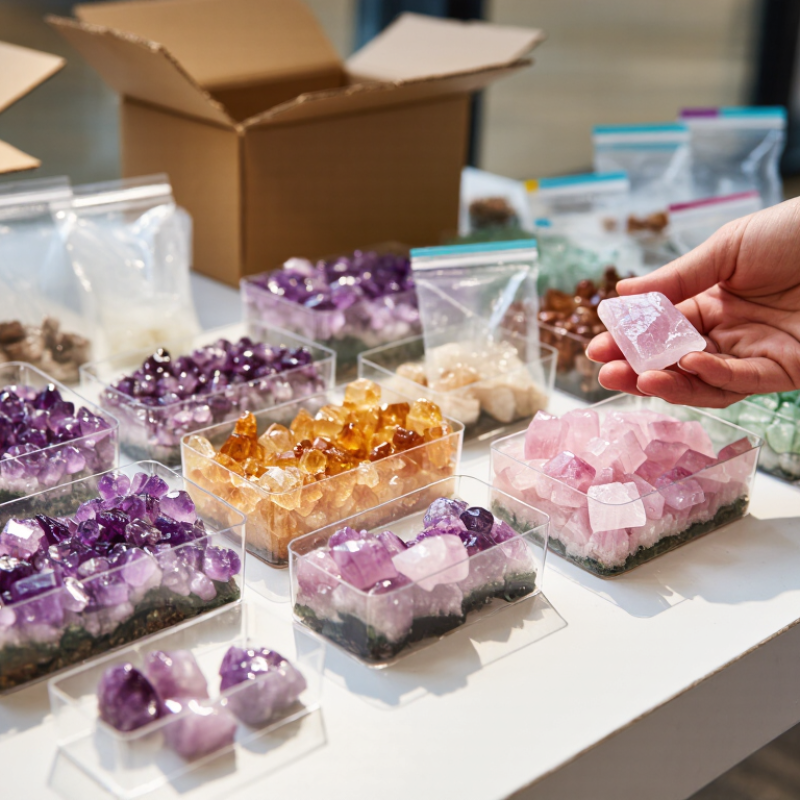
Define Your Wholesale Crystal Needs and Budget
Before setting a wholesale budget, decide what you actually need to stock. List crystal types, approximate sizes, shapes, and intended price points. A small shop serving gift buyers may need polished palm stones and modest display pieces. A specialist collection may require fewer items, but more variety in color and form. Be specific. “Mixed crystals” is not a useful purchasing plan.
Estimate quantities from real sales or customer interest, not just attractive supplier photos. Natural stones vary in tone, pattern, and size, even within one lot. Ask how items are graded, whether photos show the current batch, and what happens if pieces arrive chipped. Samples can help, though they add cost and may not represent every future shipment. A first estimate may still be wrong.
Build the budget around the full cost of receiving and selling each item. Include unit prices, shipping, packing materials, payment fees, storage, and a modest allowance for breakage or slow-moving stock. Leave room. For example, if a tray holds 24 stones, calculate the cost per sellable piece rather than dividing by the purchase price alone. Keep some funds aside for replenishment after you see what customers choose. It is tempting to spend everything on variety; that can leave too little cash for the pieces that actually sell. Track quantities and sell-through after each order, then adjust the next one.
Find and Compare Wholesale Crystal Suppliers
In 2026, comparing wholesale crystal suppliers takes more than scanning price lists. Ask how each seller grades color, clarity, size, and visible inclusions. A “mixed grade” can mean different things from one supplier to another. Request current photos under neutral light, plus measurements and stone descriptions. For dyed, coated, or heat-treated pieces, ask for clear disclosure. These details help you price products honestly and avoid surprises after delivery.
Order a small sample before committing to a large minimum quantity. Check whether the sample matches the bulk lot, not just the listing image. Ask about minimum order quantities, restocking timelines, packaging, breakage allowances, and return terms. Get the answers in writing. A responsive supplier should explain what happens when a parcel arrives chipped or noticeably different. If replies stay vague, pause.
Compare total cost, not unit price alone: shipping, duties, payment fees, and expected damage all affect your margin. Confirm available stock and whether lots can be replenished consistently. Review invoices and any origin or treatment records the supplier can provide. They may not have every document. That’s worth noting. A simple comparison sheet helps, though grading still leaves room for judgment. A low quote can look attractive, then feel costly when color varies across the box.
How to Buy Crystals Wholesale in 2026? Find and Compare Wholesale Crystal Suppliers
Compare common crystal types by Mohs hardness when specifying products to wholesale suppliers.
Mohs hardness is a relative scratch-resistance scale, not a measure of crystal quality. Values are typical approximations; some minerals have a range of hardness.
Verify Crystal Quality, Authenticity, and Ethical Sourcing
How to Buy Crystals Wholesale in 2026?
A wholesale price means little if the stones differ from the sample. Request a small batch before placing a larger order. Compare color, clarity, weight, and surface texture in daylight. Check for chips, uneven polish, and drilled holes that do not match the listing. Small details matter. Ask whether stones are natural, dyed, heat-treated, coated, or assembled. A seller should describe treatments clearly and avoid calling every piece “untreated” without evidence.
For higher-value purchases, request relevant gem identification or treatment reports, and confirm what each document covers. A report may apply to one tested stone, not an entire shipment. Compare the delivered batch with the approved sample, and photograph any differences before resale. Even careful checks miss things. I would rather delay an order than assume a certificate answers every question.
Ethical sourcing needs more than a reassuring label. Ask where the material was mined or collected, who handled it, and what information supports those claims. Look for traceable invoices, supplier records, and clear answers about worker conditions and environmental practices. If the seller cannot provide details, treat that as a reason to pause—not proof of wrongdoing. Keep records. Supplier answers can be incomplete, and buyers should revisit their assumptions as better documentation becomes available.
Review Pricing, Minimum Orders, and Shipping Terms
Wholesale crystal prices can look straightforward until size, finish, and grading differ. Compare like with like: ask for the price per piece or kilogram, the stated grade, and clear photos of the actual lot. A low quote may reflect smaller stones, mixed quality, or basic packaging. Ask whether prices change at different order volumes, and calculate the landed cost, including freight and handling. The cheapest quote is not always the best value.
Check the minimum order quantity by style, color, and total order. A supplier may require 20 pieces per design, even when the overall order is small. Confirm whether you can mix varieties to reach the minimum. Request a sample or a small trial order when possible. It costs more per piece, but can reveal uneven polish, chips, or color differences. Photos help, but they are not a full inspection. That distinction is easy to overlook.
Shipping terms deserve the same attention as price. Ask for the dispatch window, carrier options, estimated transit time, packaging method, and responsibility for damage in transit. Request a written freight estimate before paying; bulky stones can make shipping surprisingly expensive. Confirm who handles import charges where applicable, and check the delivery address carefully. Keep all agreed terms in writing. One caution: estimates can change, so leave room in your budget.
Place a Trial Order and Evaluate the Supplier
A trial order should test more than whether a parcel arrives. Choose a small mix of crystal types and sizes you may actually sell. Ask for written details on dimensions, weight, finish, and grading before paying. Keep the product list and quoted prices for comparison. Small details matter.
When the parcel arrives, inspect several pieces under neutral daylight. Compare their color, clarity, shape, and polish with the supplier’s photos and description. Natural variation is normal, so identical stones are not a realistic standard. However, repeated chips, undisclosed treatments, or inconsistent sizing deserve a clear explanation. Photograph defects beside a ruler, and record how many pieces meet your stated requirements. One attractive sample is not enough.
Also assess the less visible parts of the transaction. Was the order packed to limit impact damage? Did the quantities and invoice match? Note the time between payment, dispatch, and delivery, then check whether the supplier responds clearly to specific questions. A single smooth order cannot prove long-term reliability. I would avoid placing a large repeat order until the supplier has handled at least one issue or clarified a discrepancy. That may feel cautious, but a small test can reveal gaps that polished product photos cannot.

 English
 Français
 Español
 Deutsch