What Are the Best Thermal Sticker Labels in 2026?
Choosing the best Thermal Sticker Labels in 2026 starts with the job, not the product photo. A shipping label faces friction, damp cartons, and quick handling; a freezer label faces condensation and cold. Those are different tests. Direct thermal stock can suit short-lived labels, while thermal-transfer options often make sense when durability matters. Printer compatibility matters too. Width, core size, adhesive, and ribbon can turn a promising roll into wasted stock.
A practical, editorial paraphrase of label-industry analyst Mike Fairley’s guidance is: “Match the label to its real use conditions, not just its price.” This is not presented as a verified verbatim quotation. It points to a useful comparison: print clarity, adhesive performance, face material, and expected exposure. Look closely. A crisp barcode on a warm desk may still smudge after weeks in a delivery van. Claims such as “waterproof” or “fade-resistant” deserve scrutiny; performance depends on materials, printer settings, and handling.
This guide compares Thermal Sticker Labels for common tasks, including shipping, retail pricing, product identification, and storage. It also considers roll consistency, label removal, and total cost per usable label, not only the price per roll. Small details count. Still, no single label wins everywhere. A low-cost option may suit a temporary shelf tag yet disappoint on a sunlit package. Treat the recommendations as a starting point, then test a sample on your own printer and surface. That extra check is easy to skip.
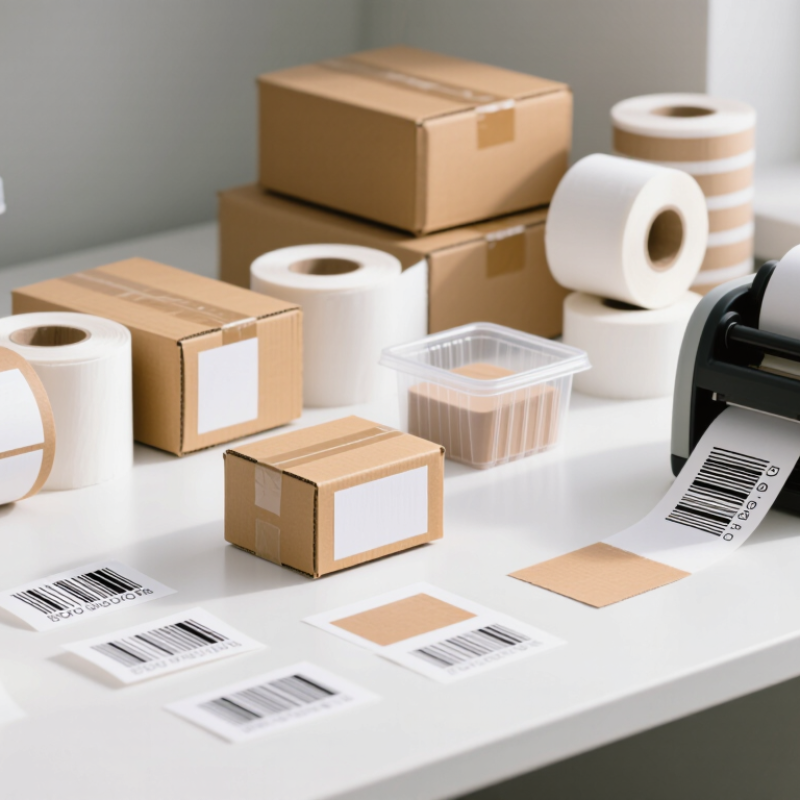
What Thermal Sticker Labels Are and How They Work
Thermal sticker labels are pressure-sensitive labels that print through heat rather than liquid ink. Their face material carries a heat-reactive coating, while the adhesive bonds the label to a package, shelf, or container. In a direct thermal printer, tiny printhead elements warm selected spots. Those spots darken to form text, barcodes, or simple graphics. The process is quiet and fast. No ink cartridge is needed.
Thermal transfer printing works differently. Heat moves ink from a ribbon onto the label surface, which can improve resistance to handling, moisture, or fading. The right choice depends on the printer, label material, adhesive, and expected conditions. A shipping label used for a short trip has different needs from an inventory label kept in a warm warehouse. Check printhead settings and material compatibility; mismatched supplies can cause pale text, smearing, or residue.
Direct thermal labels are convenient, but their images may fade with heat, sunlight, or time. That matters for records kept for months. Thermal transfer labels often last longer, though they add ribbon cost and setup. Test a small roll on the actual surface. Cardboard, plastic, and chilled packaging behave differently. Even careful testing may miss real-world wear, so review labels after storage or transit. In 2026, “best” means a clear, scannable print that suits the job—not simply the darkest one.
Types of Thermal Sticker Labels and Their Materials
Thermal sticker labels vary by printing method, face material, and adhesive. Direct thermal stock has a heat-sensitive coating, so the printer creates images without a ribbon. It suits parcel labels and short-term product tags. But sunlight, warm storage, or friction can fade the print. Not ideal for every job.
Thermal-transfer labels use a ribbon, often with paper or synthetic faces. Coated paper gives sharp text for indoor shelves and cartons. Polypropylene labels resist moisture better, while polyester can handle more demanding use, such as equipment identification. These materials are not interchangeable. A label that survives a damp cooler may still peel from a dusty container.
Adhesive matters just as much. Permanent glue works well on clean cardboard, while removable adhesive can suit reusable bins. Some labels need stronger tack on curved or textured surfaces. Check the full combination: printer settings, ribbon, surface, temperature, and expected handling. A small test on the actual package often reveals problems a specification sheet misses. It takes time, admittedly, but choosing by material name alone can be a costly guess.
How to Evaluate Thermal Sticker Labels in 2026
What Are the Best Thermal Sticker Labels in 2026?
Evaluate labels against the job, not just the price per roll. Smithers’ The Future of Label Printing to 2028 projects the global label market will approach $67 billion by 2028, reflecting demand across varied applications. That growth does not prove every label performs well. For your application, check printer compatibility, adhesive type, label size, and storage conditions. A label that feeds smoothly in a desktop printer may still lift from a cold carton or fade near a sunny window.
Test samples on the actual surface. Print a small batch, then scan the barcodes under ordinary warehouse lighting. Rub the print with a dry cloth and check whether edges curl after exposure to expected heat, moisture, or refrigeration. Direct thermal labels need no ribbon but can be more sensitive to heat and light; thermal-transfer labels use a ribbon and may suit longer-lasting identification. Results vary by coating and adhesive, so do not assume all rolls behave alike.
Tips: Keep sample labels on the real packaging for several days. Record printer settings, surface, and storage conditions. It is a simple test, but easy to overlook. If a label fails, check the whole setup before blaming the material; pressure, darkness, and surface cleanliness can also affect results.
Best Thermal Sticker Labels for Different Applications
What Are the Best Thermal Sticker Labels in 2026?
The best thermal sticker label depends less on the printer than on where the label must survive. For parcel shipping, direct thermal labels suit short-lived addresses and tracking details. They print without ink ribbons, helping teams change rolls quickly during a packing rush. However, sunlight and heat can fade or darken the image before delivery. That matters.
Retail shelves and inventory rooms call for different choices. Direct thermal labels work well for indoor price stickers and fast-changing shelf tags. For asset tags, equipment bins, or products handled for months, thermal-transfer printing usually resists smearing better. The ribbon adds a consumable and another setup step. Worth it?
Food containers and cold storage need suitable adhesive as much as clear printing. A freezer-rated label may grip a chilled tub, while ordinary adhesive can lift after condensation forms. Test labels on the actual surface, at the real temperature, and after wiping or handling. A label that looks perfect on a desk may fail in a damp cooler. No single stock wins every job, so choosing by application takes a little trial and error. Skipping that test can cost more.
How to Choose and Store Thermal Sticker Labels
What Are the Best Thermal Sticker Labels in 2026?
Choosing thermal sticker labels starts with the printer and the job. Direct thermal labels suit short-lived shipping or shelf tags; heat, sunlight, and friction can fade their print. Thermal-transfer labels use a ribbon and generally suit records that need to last longer. Check label width, core size, adhesive, and surface before ordering. A label that sticks firmly to a clean carton may peel from a cold, dusty container. Test a small roll first.
Storage matters just as much. Keep rolls in their original packaging, away from windows, heaters, and cleaning chemicals. High heat can darken direct thermal stock before printing. ISO 187:2022 specifies a paper-testing atmosphere of 23°C ±1°C and 50% ±2% relative humidity. This is a conditioning standard, not a universal storage guarantee; follow the label supplier’s limits when available. I have seen well-chosen stock disappoint after a warm delivery van—it is easy to overlook that.
Tips: Store rolls flat in a cool, dry, dark cabinet. Let chilled stock reach room temperature before printing. Keep one sample label from each batch, and check print contrast and adhesion on the real surface. Small tests save waste.
 English
 Français
 Español
 Deutsch