BLOG

Who Are the Best Guar Gum Suppliers in China?

Choosing among the best Guar Gum suppliers in China requires more than comparing price lists. Guar gum is a plant-derived thickener, and its performance depends on grade, hydration, viscosity, and processing conditions. Grand View Research estimated the global guar gum market at approximately US$1.2 billion in 2023. Such figures offer useful context, but market estimates differ by scope and methodology. Buyers should treat them as indicators, not guarantees of supplier quality.

The technical foundation matters. In their review of guar gum processing and food applications, researchers Deepak Mudgil, Sheweta Barak, and Bhupendra Khatkar describe it as “a galactomannan obtained from endosperm of guar bean.” This concise definition points to a practical sourcing question: can a supplier document the material’s origin and keep specifications consistent? Ask for recent certificates of analysis, viscosity results, particle-size details, and batch traceability. Then compare samples under your actual mixing conditions. A neat datasheet is not enough.

Look closely. A brief test can reveal slow hydration, uneven flow, or residue that a brochure never mentions. China-based suppliers may process or export guar gum sourced from other producing regions, so clarify origin rather than assuming it. Check production capacity, quality controls, sample consistency, and response times before committing to volume. No supplier is best for every use. The strongest shortlist will depend on your application, required grade, and tolerance for variation. Even a careful comparison leaves room for uncertainty; specifications do not always predict performance at scale.
Who Are the Best Guar Gum Suppliers in China?

How Guar Gum Is Produced and Used in Industry

Guar gum begins with guar seeds, not a chemical synthesis. After harvest, processors clean and dry the seeds, then remove the hull and germ to recover the pale endosperm. Milling and sieving turn this material into powder. Some grades are further treated to improve dispersion or viscosity. Small details matter. Moisture, particle size, and hydration time can change how smoothly a batch mixes. In practice, powder added too quickly may form stubborn lumps; a neat process diagram rarely shows that.

Industry uses depend on guar gum’s ability to thicken water and bind ingredients. Food makers use it to adjust texture in sauces and frozen products, while paper and textile plants use it to support coating and finishing processes. Oilfield fluids are another major application. Grand View Research estimated the global guar gum market at about US$1.2 billion in 2023 and projected growth through 2030. That market estimate describes commercial demand, not a guaranteed outlook for any supplier. Buyers assessing Chinese suppliers should request batch-specific viscosity results, moisture and microbiological data, and clear traceability for the seed and processing steps. Specifications help, but they do not remove every variation between batches.

What Makes a Guar Gum Supplier Reliable

Who Are the Best Guar Gum Suppliers in China?

What Makes a Guar Gum Supplier Reliable

A reliable guar gum supplier provides more than an attractive quotation. Buyers should look for clear product specifications, consistent batch quality, and traceable production records. A certificate of analysis should identify key properties, such as viscosity and moisture, and match the supplied lot. For sourcing in China, ask how the supplier controls raw material selection, processing, and packaging. Specific answers are more useful than broad promises.

Consistency takes evidence. Request samples from more than one production lot, then compare their performance in your own application. Check whether packaging protects the powder from moisture and whether labels show lot numbers and production dates. A supplier should respond clearly when you ask about test methods, lead times, or a quality issue. Small details matter. Still, a document alone cannot prove every shipment will perform exactly as expected.

Leading Guar Gum Suppliers in China

Leading guar gum suppliers in China are best assessed by process control, product consistency, and clear communication, rather than polished catalogues. Ask how the supplier controls particle size, moisture, and viscosity across production batches. Request a recent specification sheet and certificate of analysis for the grade you plan to buy. Small details matter. A sample should be tested under your own mixing conditions, since guar gum can behave differently across food, paper, and other industrial applications. Compare the measured viscosity with the stated range, and record mixing time and temperature. Confirm whether the supplier can provide steady batch documentation and explain any changes in raw material or processing.

Reliable suppliers answer technical questions directly and make product limitations clear. Check their production capacity, packaging options, lead times, and export experience against your actual order needs. A video call or facility audit may help verify equipment, storage conditions, and quality checks, but neither replaces independent testing. One weakness in supplier comparisons is that buyers may rely too heavily on a single sample. That can miss variation between batches. Ask for traceable lot numbers and a practical procedure for handling quality concerns. Clear answers are useful. So are honest limits. The strongest supplier relationship is built on repeatable results, timely updates, and specifications both sides understand.

How Chinese Suppliers Compare in Quality and Service

Comparing guar gum suppliers in China is less about polished catalogs than repeatable performance. Ask for a current specification sheet and a certificate of analysis linked to the production lot. Check viscosity under stated test conditions, mesh size, moisture, and microbiological limits. Numbers without test methods are difficult to compare. Small details matter.

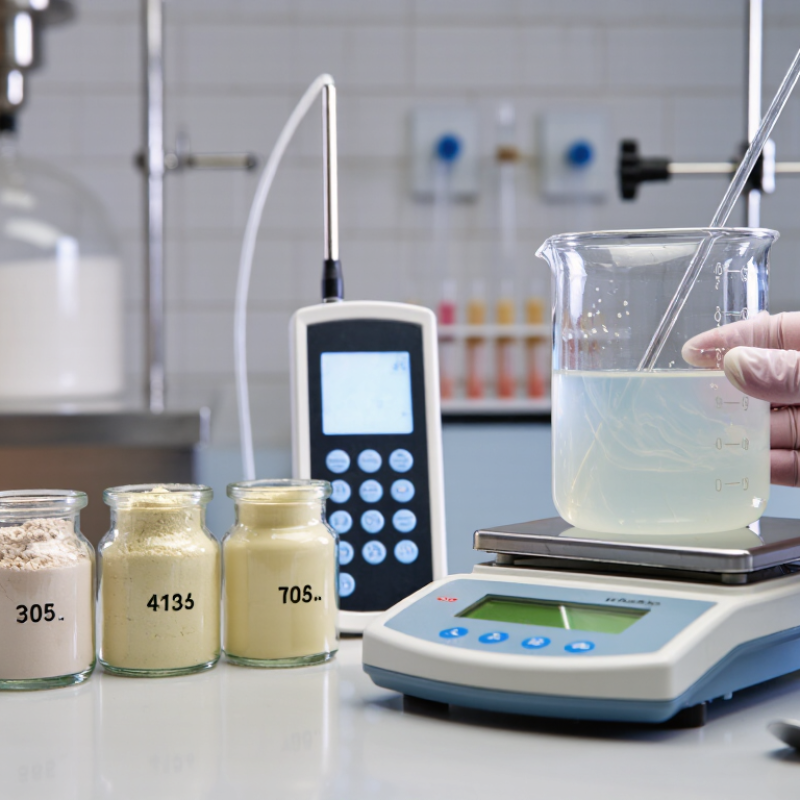
Request a sample from a regular production lot, then test it in your own formulation. Record how quickly the powder disperses, whether lumps form, and how the mixture behaves after standing. Guar gum may perform differently across food, feed, and industrial uses, so a general sample test is not enough. One clean sample can still mislead.

Service quality shows up in practical moments. Can the supplier explain a specification change clearly? Do they answer questions about packaging, shelf life, and shipping schedules with specific information? Compare response times and document accuracy, not just quoted prices. A neat certificate does not guarantee a smooth order. I would also check how complaints are handled before relying on a long-term supply plan; that step is easy to skip.

How to Choose a Guar Gum Supplier for Your Business

Choosing a guar gum supplier in China starts with your product, not a price list. A food manufacturer may need consistent viscosity and clear allergen controls; a paper processor may prioritize dispersion and mesh size. Grand View Research estimated the global guar gum market at about USD 1.1 billion in 2023 and projected growth through 2030. That growth makes supplier checks more important, not less. Ask for a current certificate of analysis, product specification, batch traceability, and the origin of the guar beans. Compare viscosity using the same test method; figures from different methods may not be comparable.

Tips: Request a sample from the production grade you plan to buy. Test it in your own recipe or process, and record hydration time, lumping, and viscosity. Check whether the supplier can provide food-grade documentation when relevant, plus clear production capacity and lead-time commitments. A polished brochure is not proof. Small details matter.

Before placing a large order, confirm packaging, storage conditions, and how complaints are investigated. Ask for recent batch records or an audit summary where available. Industry reports describe market trends, not the reliability of an individual factory, so verify claims directly. I would also leave room for a second test: our first bench result can be misleading when mixing speed or water temperature changes. The best supplier is the one whose documented quality stays steady across repeat orders.

Article Source:

Get in touch

Our goal is to provide you with excellent customer service while meeting all of your packaging automation needs. We provide the peace of mind that comes from working with one manufacturer, one service department and one point of contact.