
Top 10 Best Freeze Dried Dog Food Brands in 2026
Choosing a dog food can feel straightforward until labels, ingredients, and feeding directions compete for attention. Freeze Dried Dog Food offers a lightweight format with visible pieces and convenient storage, but products can differ greatly in ingredients, nutrition, and preparation requirements. Some are complete diets; others are intended only as toppers. That distinction matters.
This 2026 guide compares ten brands using practical considerations: ingredient transparency, nutritional adequacy, product variety, feeding guidance, and value. A clear label is useful. So is a feeding chart that explains portions by your dog’s weight. We also consider how easily a food fits daily routines, from measuring nuggets at home to packing meals for a trip. Small details can matter.
No ranking can identify the perfect food for every dog. Age, activity, sensitivities, health conditions, and taste all influence what works. Freeze-dried recipes may also require careful handling and preparation, so follow each manufacturer’s directions and ask your veterinarian about major diet changes. A polished package alone is not proof of quality. Honestly, comparing brands still leaves some uncertainty, especially when sourcing details or real-world acceptance are hard to assess. Use this list as a starting point, then check the current label and your dog’s response before settling on a routine.
What Freeze-Dried Dog Food Is and How It Is Made
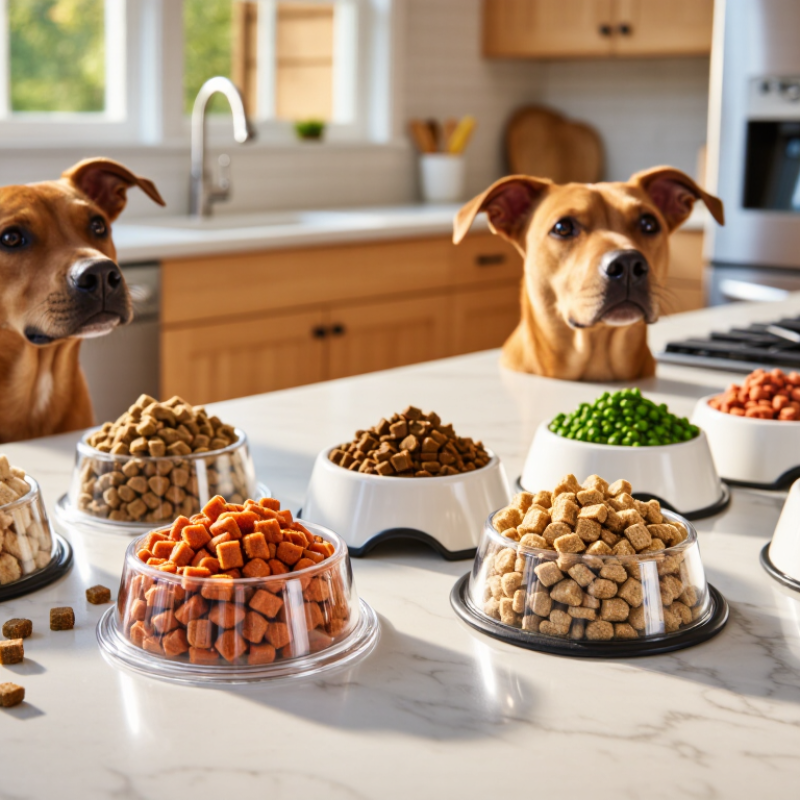
Freeze-dried dog food is made by removing most of the water from frozen ingredients. Meat, organs, vegetables, or other ingredients are first frozen, then placed in a vacuum chamber. Under low pressure, ice changes directly into water vapor, leaving the food light and porous. The pieces may look dry and crisp, but they can soften quickly when water is added. That texture is part of the process, not proof of food quality.
Freeze-drying can help preserve the shape and some nutrients of ingredients, but it does not automatically make food sterile or nutritionally complete. That distinction matters. When a recipe contains raw animal ingredients, careful sourcing, processing, and handling remain important. Follow the package’s storage directions, wash hands and bowls after serving, and do not leave rehydrated food sitting out for long. I sometimes see the dry appearance mistaken for a safety guarantee; it is not one.
Before choosing a product, check whether it is labeled as a complete diet or as a topper, and confirm that its nutrition statement suits your dog’s life stage. Add the amount of water specified on the label, then allow the pieces time to soften. Some chunks stay firm in the center. A veterinarian can help assess whether the food fits a dog with allergies, health concerns, or changing energy needs.
How to Evaluate Freeze-Dried Dog Food Brands
When evaluating freeze-dried dog food, look beyond appealing ingredient names. Check the nutritional adequacy statement for your dog’s life stage, and see whether the food is labeled complete or intended only as a topper. Review the feeding guide and calorie content, too. Small, dry pieces can look modest while providing substantial calories. A clear label is useful, though it cannot tell you whether the food suits your individual dog.
Tips: Read the package before opening it. Follow its storage and rehydration directions, wash hands and bowls after handling, and refrigerate prepared food if instructed. Keep an eye on your dog’s stool, appetite, and weight when changing foods. Slow transitions can make reactions easier to notice.
Look for transparent sourcing, a reachable customer-support contact, and specific quality-control information, such as testing practices. Broad claims alone are hard to assess. I would not treat a tidy ingredient list as proof of superior nutrition; that assumption is tempting, but incomplete. Compare the food’s stated nutrients and calories with your dog’s needs, and ask a veterinarian for guidance if your dog has a medical condition or a restricted diet.
Top 10 Best Freeze Dried Dog Food Brands in 2026 - How to Evaluate Freeze-Dried Dog Food Brands
| Evaluation Criterion | What to Check | Stronger Evidence | Potential Warning Sign | Suggested Weight |
|---|---|---|---|---|
| Nutritional adequacy | Check whether the food is labeled complete and balanced for a stated life stage, or intended only for intermittent or supplemental feeding. | A clear nutritional adequacy statement identifies the life stage and indicates whether adequacy is based on nutrient profiles or feeding trials. | A topper or treat is presented as a sole diet without a complete-and-balanced statement for the dog’s life stage. | 18% |
| Life-stage suitability | Match the product’s adequacy statement to the dog’s age and needs, including growth, adult maintenance, or all life stages. | The intended life stage is stated plainly; growth diets provide any applicable instructions for dogs expected to reach a large adult size. | Vague wording makes it difficult to tell whether the food is suitable as a main diet for a puppy or adult dog. | 12% |
| Ingredient transparency | Review the ingredient list and product description for named animal ingredients, identifiable components, and clear formulation details. | Ingredients and their forms are described consistently across the label and product information. | Marketing language makes broad claims that are not supported by the ingredient list or feeding directions. | 10% |
| Calorie information | Look for metabolizable energy, commonly stated as kcal per kilogram and/or kcal per cup or serving. | Calorie content is easy to find, and the feeding guide explains whether measurements refer to the food as packaged or prepared. | No usable calorie information is provided, making portion planning difficult. | 10% |
| Rehydration and feeding directions | Check whether the label explains how much water to add, how long to wait, and how to portion the prepared food. | Directions are specific and consistent with the stated serving size and calorie information. | Preparation guidance is missing or leaves serving measurements ambiguous. | 9% |
| Food-safety guidance | Review handling, storage, and hygiene instructions, especially when the product contains raw animal ingredients. | Instructions cover safe storage and careful handling; owners are advised to wash hands and clean food-preparation surfaces and bowls. | The product is treated as risk-free solely because it is freeze-dried. Freeze-drying does not guarantee elimination of harmful pathogens. | 12% |
| Quality-control information | Look for accessible information about ingredient sourcing, manufacturing controls, and testing practices. | The maker clearly describes its quality-control procedures and how it monitors product consistency and safety. | Important safety or quality claims are made without meaningful supporting details. | 10% |
| Suitability for the individual dog | Consider known allergies, medical conditions, age, and any diet restrictions with veterinary guidance where appropriate. | The ingredient and nutrient information is detailed enough to discuss the food’s suitability with a veterinarian. | A general “natural” or “limited ingredient” claim is treated as proof that the food suits every dog. | 8% |
| Package and storage details | Check the package for storage instructions, a lot code, and a best-by date. | Packaging is intact, instructions are legible, and the product can be traced by its lot information. | Storage directions or identifying information are missing, or the package is damaged. | 5% |
| Value per feeding | Compare cost using calories or prepared servings rather than package weight alone. | Cost comparisons account for calorie density, feeding directions, and any water added during preparation. | Price is compared by package size alone, which can be misleading when products differ in calorie density. | 6% |
Top 10 Freeze-Dried Dog Food Brands in 2026
A useful 2026 comparison of ten leading freeze-dried dog food makers should begin with the label, not the marketing. Check whether a named animal protein appears near the top and whether organs, vegetables, and added nutrients are clearly identified. Plain language matters. Look for feeding guidance by weight and life stage, plus calories per measured serving; small nuggets can pack surprising energy. Recipes vary.
Processing matters, too. Freeze-dried food contains little moisture, so add clean water and follow the package’s rehydration directions. Wash the bowl, and refrigerate leftovers when instructed. Ask the maker for a typical nutrient analysis and quality-control details, especially if your dog has allergies or a health condition. A veterinarian can help assess whether a recipe suits your dog. Not every bag is a full meal.
When comparing ten options, consider protein sources, calorie density, ingredient transparency, package size, and cost per day—not just price per bag. Check that the product is appropriate for your dog’s age and activity level. Transition gradually over several days, watching appetite and stool. Rankings can miss how an individual dog responds; a tidy shortlist may need revising after one refused dinner.
How the Leading Brands Compare in Ingredients and Nutrition
Freeze-dried dog foods may share appealing ingredients, but their nutrition can differ sharply. Compare the first ingredients, named protein sources, and guaranteed analysis rather than judging by colorful pieces. A food listing several meats may still provide very different protein and fat levels from another. Check calories per cup or gram, too; light-looking portions can be energy-dense. This is easy to miss.
For everyday feeding, look for a clear statement that the food is complete and balanced for your dog’s life stage. Some freeze-dried products are intended only as toppers or treats, so they should not replace a complete diet. Ingredient lists matter, but they do not reveal everything about digestibility or nutrient availability. Ask your veterinarian to review a food if your dog has allergies, a medical condition, or unusual weight changes. Small details count.
Handling is part of the comparison. Follow the package directions for serving and storage, and wash bowls and hands after feeding. Freeze-drying reduces moisture; it does not make every product sterile. If you add water, measure portions consistently and avoid leaving softened food out for long periods. Labels can be confusing, and even careful shoppers may miss a serving-size difference.
How to Choose a Freeze-Dried Food for Your Dog
Choosing freeze-dried dog food starts with the nutrition statement, not the front of the bag. Look for wording that says the food is complete and balanced for your dog’s life stage. A topper or treat may not provide everything needed as a sole diet. Check the label. Compare the guaranteed analysis, calorie content, and feeding directions, since two recipes can differ greatly in density.
Match the recipe to your dog’s needs and your routine. A puppy, senior dog, and highly active adult may need different nutrient levels. If your dog has allergies, a sensitive stomach, or a medical condition, ask your veterinarian before changing foods. Ingredient lists can help identify proteins, but they do not prove that a food will suit every dog. Introduce a new diet gradually, and watch for changes in appetite, stool, or skin.
Freeze-dried food is often rehydrated before serving, so follow the package directions and use clean water and bowls. Measure portions after preparing them, rather than guessing from dry pieces. Small details matter. Check whether the package gives clear storage instructions, and keep the food sealed in a cool, dry place. Cost per serving is worth comparing, too; a compact bag may contain fewer meals than it appears to.