BLOG

2026 Best Commercial Deck Oven for Bakeries?

Choosing the 2026 best commercial deck oven for bakeries is not about buying the largest machine. It is about matching heat, capacity, and workflow to the products you bake every day. A crisp sourdough crust needs a different balance of heat and steam than a tray of soft rolls. And a busy Friday service will expose weak recovery time fast.

A commercial deck oven can deliver steady, direct heat across stone or steel surfaces, but performance depends on more than its brochure claims. Check temperature recovery, deck dimensions, steam controls, insulation, and access for cleaning. Picture the daily routine: loading dough with a peel, rotating loaves, then wiping flour from a hot deck. Small design details matter. So does installation support.

As [verified expert name and role] puts it, “[Insert an exact, source-checked quotation about selecting or using a commercial deck oven].” That perspective should guide this comparison, not replace careful testing. The best choice depends on your menu, production peaks, available floor space, and staff experience. There is no universal winner. Some bakeries need multiple compact decks; others need fewer, larger chambers. This guide compares the practical trade-offs, including heat consistency, controls, energy use, maintenance, and total ownership cost. We also flag compromises that spec sheets often hide. A little doubt is useful here. Check the fit before you buy.
2026 Best Commercial Deck Oven for Bakeries?

What a Commercial Deck Oven Does in a Bakery

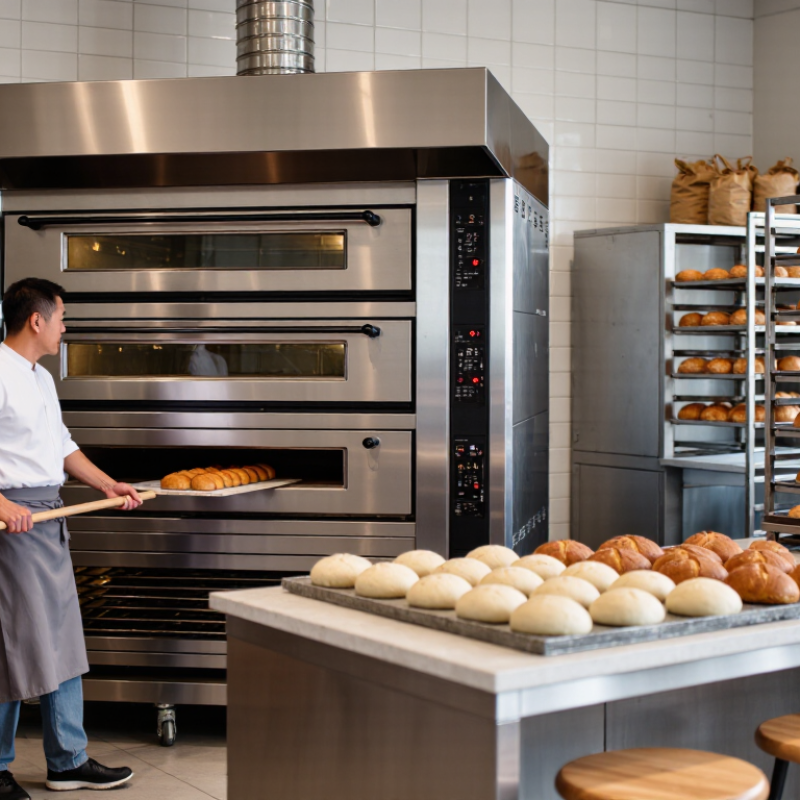
A commercial deck oven bakes products on a heated, flat surface rather than on moving trays. In a bakery, that direct contact helps create a crisp base on bread, pizza, and some pastries. Heat also reaches the product from above, supporting browning and crust formation. The result depends on dough, loading, and oven settings. Small changes matter.

Deck ovens are useful when bakers need separate baking zones or several chambers. Each deck can often be set to a different temperature, which helps manage products with different baking needs. Some models also include steam injection. Steam can delay crust formation in bread, allowing the loaf to expand before its surface sets. But steam is not a cure-all. Poor timing or excess moisture can affect the crust.

The oven also shapes daily workflow. A baker loads and unloads each deck by hand, so peel size, clearance, and batch planning matter. Stone or steel decks retain heat, but recovery between loads varies by oven and workload. Check temperature consistency across the baking surface, not just the displayed setting. Then test with your own recipes. A busy bakery may value capacity; a smaller shop may care more about floor space and energy use. The “best” choice is rarely universal.

How Deck Design and Heating Systems Affect Baking

A deck’s baking result depends on how heat reaches the product, not just the thermostat setting. A thick stone or steel deck stores heat and transfers it into dough, helping bread develop a crisp base. But a heavily loaded chamber can recover slowly. Watch the floor temperature after loading, not only the display.

Top and bottom heat need separate control. Too much bottom heat can scorch a loaf before its center sets; too little may leave a pale, soft base. Radiant heat from the chamber also affects browning, especially on tall loaves and pastries. Small test batches reveal these differences. They take time, but they prevent costly guesswork.

Heating systems matter to operating costs, too. The U.S. Department of Energy’s 2022 Industrial Decarbonization Roadmap estimates process heating accounts for about 51% of U.S. manufacturing energy use. That figure is not bakery-specific, but it highlights why heat delivery and recovery deserve scrutiny. Compare electric and gas models using measured warm-up time, recovery after door openings, and energy use across a full bake cycle. Ask for test conditions; “efficient” alone is not useful. I would also check temperature uniformity with probes across the deck. One corner may behave differently. It happens.

Which Features Matter When Comparing 2026 Models

2026 Best Commercial Deck Oven for Bakeries?
Which Features Matter When Comparing 2026 Models

Choosing a deck oven starts with the bake, not the brochure. Compare usable deck area, independent temperature controls, heat recovery, and even browning. Ask for a demonstration using your dough weight and loading pattern. A hot stone may recover differently after several cold trays. ENERGY STAR’s commercial-oven guidance reports that certified ovens use about 20% less energy than standard models. Treat that as a screening reference, not a deck-oven guarantee; check that the comparison applies to the model type you’re considering.

Check steam controls, insulation, cleaning access, and service access during a live demonstration. Test temperature stability across repeated loads, not just an empty preheat. Record preheat time and energy use during a typical shift. Small details matter. Door height and reachable controls affect daily workflow. A specification sheet cannot recreate a busy morning, and a polished demo may not reveal slow recovery.

Tips: Bring a familiar recipe and bake multiple batches. Track bake time, crust color, deck temperature, and recovery between loads. Ask for documented energy figures and clarify whether they cover standby or active baking. Compare installation needs, warranty coverage, and cleaning procedures in writing. If the trial is rushed, treat the results cautiously; one perfect first bake is not enough.

2026 Best Commercial Deck Oven for Bakeries? — Which Features Matter When Comparing 2026 Models Compare common oven configurations by capacity, installation needs, baking control, and day-to-day practicality.
Comparison Feature Single-Deck Electric Double-Deck Electric Single-Deck Gas Compact Countertop Deck
Best suited to Small and mid-sized bakeries needing steady output with a relatively simple layout. Busy bakeries that need more baking capacity without using additional floor space for separate ovens. Operations with suitable gas service and a preference for gas-fired heating. Cafés, test kitchens, and small-volume production where floor space is limited.
Typical baking capacity One baking chamber; capacity depends on chamber size and whether products are baked directly on the deck or on pans. Two independent chambers are common, allowing separate batches or settings at the same time. One baking chamber; available capacity varies substantially by oven width and depth. One smaller chamber, usually suited to limited batches rather than continuous high-volume production.
Temperature range Many commercial units provide adjustable settings reaching approximately 300°C (572°F); confirm the usable range for the model. Often similar to single-deck electric units, with controls that may be set separately for each chamber. Many models are designed for common bakery temperatures up to approximately 300°C (572°F); specifications vary. Ranges vary by unit; check that the maximum temperature meets the recipes and recovery requirements of the bakery.
Heat and baking control Electric heating elements provide controllable heat; independent top- and bottom-heat adjustment is a useful feature to compare. May provide independent chamber controls and top- and bottom-heat adjustment, helping accommodate different products. Gas burner design and chamber construction affect heat distribution; compare temperature control and documented recovery performance. Controls are often simpler. Check temperature stability and heat distribution across the full baking surface.
Steam options Steam injection is available on some configurations and can help with products that benefit from steam during baking. Steam may be available per chamber or as a shared option; confirm how the system is configured. Steam capability depends on the model and installation. Confirm water supply, drainage, and cleaning requirements. Steam may be unavailable or limited; verify this feature if it is important to the product range.
Installation considerations Requires appropriately rated electrical service. Voltage, phase, and current requirements must match the site. Often requires more electrical capacity than a single-deck unit. Confirm the building supply before purchase. Requires compatible gas service and installation by qualified professionals; ventilation and local code requirements apply. May have a smaller footprint, but electrical load, clearances, ventilation, and countertop support still need checking.
Space and workflow Uses a dedicated floor area and may need a compatible stand, landing space, and room for loading. Adds baking capacity vertically; check overall height, access for loading, and clearance above the oven. Requires room for the oven and any applicable gas connection and ventilation provisions. Designed to fit on a suitable counter or stand; confirm weight, clearance, and safe access around the unit.
Potential advantages Clear operating setup, useful capacity for many independent bakeries, and no gas connection required. Higher potential throughput in a compact floor footprint; separate chambers can support varied baking schedules. Can be a practical option where gas infrastructure is already available and suitable for the installation. Lower space commitment and convenient access for small batches, menu trials, or supplementary production.
Points to verify before buying Usable chamber dimensions, deck material, electrical requirements, steam availability, and service access. Independent chamber controls, total connected load, installation height, and whether both chambers meet production needs. Gas type and pressure, ventilation requirements, temperature consistency, installation costs, and service availability. Actual batch capacity, recovery between loads, electrical requirements, counter support, and cleaning access.
Overall fit A balanced starting point for bakeries with moderate production and adequate electrical service. A strong capacity-oriented choice when vertical space is available and the electrical supply can support it. Worth comparing when the site already has appropriate gas infrastructure and installation is feasible. Best considered for smaller workloads or as an additional oven rather than a high-volume production line.
Comparison note: These are general characteristics of commercial deck-oven configurations, not specifications for a particular model. Dimensions, temperature limits, capacity, utilities, steam features, and installation requirements vary by manufacturer and configuration. Check the current specification sheet and have a qualified installer confirm site requirements before ordering.

How to Match Oven Capacity and Controls to Bakery Needs

A deck oven should match the bakery’s busiest hour, not its average day. Count the loaves, pizzas, or pastry trays you need to bake in one cycle, then check how many fit on each deck with room for airflow. A small bakery producing several bread styles may need more flexible deck space, while a café baking one tray at a time may value a compact footprint. Peak hour matters. Also consider how quickly the oven recovers heat after loading; frequent door openings can slow production.

Controls should fit the team’s actual routine. Separate top and bottom heat settings help when bread needs a firm base but delicate toppings brown quickly. Steam injection can support crust development, but staff need clear, repeatable settings and a way to manage water supply. A simple timer is useful; programmable recipes may help when shifts change or products vary. More features are not automatically better. Confusing controls can lead to uneven batches, especially during a busy morning.

Before choosing, compare the oven’s usable deck dimensions with your pans and product sizes, then test a representative bake if possible. Record loading time, bake time, and recovery between cycles. These figures give a better estimate than capacity claims alone. The estimate will still be imperfect: seasonal demand and staff habits change. Leave some production headroom, but avoid paying for capacity that sits unused most days.

2026 Best Commercial Deck Oven for Bakeries: Matching Capacity to Demand

Illustrative throughput model: two trays per deck, a 30-minute bake, and 10 minutes for unloading and reloading.

How to use this chart: Under these assumptions, each deck completes 1.5 cycles per hour, or about 3 trays per hour. Multiply by the number of decks to estimate hourly tray capacity. Actual output depends on oven dimensions, product, bake time, loading workflow, and recovery time. Choose controls that support the bakery’s recipes and repeatability needs, and confirm capacity with the oven’s specifications and a production test.

How to Assess Efficiency, Installation, and Long-Term Costs

2026 Best Commercial Deck Oven for Bakeries?

Efficiency is more than the oven’s advertised power rating. Track how long it takes to reach temperature, recover heat after loading, and bake a full tray consistently. Compare those readings during your busiest production period, not only during a quiet test. A few extra minutes per batch can affect labor, energy use, and delivery timing. Small details matter.

Tips: Record warm-up time, batch size, and temperature recovery for several shifts. Ask staff to note uneven browning or repeated adjustments. Real operating notes beat guesses.

Before installation, measure doorways, floor space, ceiling clearance, and the route from delivery entrance to kitchen. Confirm electrical or gas capacity, ventilation needs, and service access with qualified local professionals. A unit that fits on paper may still be difficult to move or maintain. Check these details before ordering.

Estimate long-term costs alongside the purchase price: energy, cleaning supplies, routine servicing, replacement parts, and possible downtime. Ask for written maintenance requirements and confirm that technicians can reach your area. Compare expected output with your actual menu and daily volume. Bigger capacity is not automatically better; an oversized oven may sit partly empty and consume resources. Cost estimates can be imperfect, so leave room for repairs and changing demand.

Get in touch

Our goal is to provide you with excellent customer service while meeting all of your packaging automation needs. We provide the peace of mind that comes from working with one manufacturer, one service department and one point of contact.